Rye
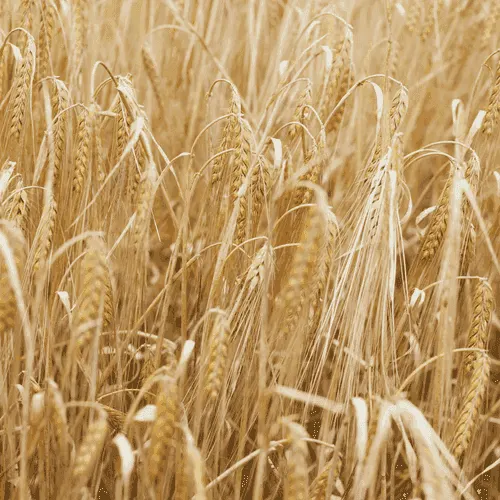
Other names rye grain, rye cereal
Rye: high in FODMAPs, oligosaccharides and gluten; moderate in oxalates; low in nickel. If you're sensitive to any of these, check it against your profile before eating.
Intolerances
- FODMAPsHigh
Rye is the fructan-richest of the everyday cereals as they are actually eaten, which is as bread: it measured above wheat, and barley was not among the breads tested. That is also why it is sold as a fibre-rich bread: the same chains that ferment badly here are the ones the label counts as fibre. Traditional rye sourdough, fermented long enough, measures lower than the fast-risen version. Whelan puts a number on the rank: measured as bread, rye came out the richest of those tested, 1.94 grams of fructan per hundred against 0.61 at the bottom of the range.
Sources· 1
- Whelan K et al., Int J Food Sci Nutr 62:5 (2011) 498-503, fructan measured in wheat, rye and gluten-free breads
- OligosaccharidesFODMAPsHigh
Rye holds more fructan than the other everyday cereals measured as bread, which is the same fact its label states as a high fibre content. Fructans are counted as dietary fibre - the health claim and the problem are the same molecule. Whelan puts a number on the rank: measured as bread, rye came out the richest of those tested, 1.94 grams of fructan per hundred against 0.61 at the bottom of the range.
Sources· 1
- Whelan K et al., Int J Food Sci Nutr 62:5 (2011) 498-503, fructan measured in wheat, rye and gluten-free breads
- GlutenContains
Rye contains gluten, and its secalin behaves like wheat gliadin in coeliac disease. Rye bread is often assumed to be a wheat alternative; on this axis it is not one.
Sources· 1
- Regulation (EU) No 1169/2011, Annex II, the fourteen allergens requiring declaration
- OxalatesModerate
Rye carries oxalate in the same place wheat does - the outer layers - and rye is almost always eaten wholegrain, because a white rye flour makes a bread nobody wants. The grain that is rarely refined is the grain that keeps its bran.
Sources· 1
- Gad S et al., Food Chemistry 8 (1982)
- NickelLow
Rye is eaten almost entirely as wholegrain bread, which keeps the bran the nickel sits in — the exact form these surveys name. Two national surveys put bread and cereals among the groups that deliver most of the dietary nickel — near the top because they are eaten in quantity rather than because they are concentrated, and neither publishes a figure for a single grain.
Sources· 2
- Smart G.A. & Sherlock J.C., Food Addit Contam 4 (1987) 61-71, nickel in foods and the diet
- Flyvholm M-A et al., Z Lebensm Unters Forsch 179 (1984) 427-431
- Histamine (+liberators / DAO inhibitors)None
- TyramineNone
- SalicylateNone
- SucroseNone
- LactoseFODMAPsNone
- SorbitolFODMAPsNone
- FructoseFODMAPsNone
Intolerance levels are based on our documented scientific sources. See sources →
React to FODMAPs? Check these too




More in Grains
 Amaranth
 Barley
 Basmati rice
 Brown rice
 Buckwheat
 Bulgur
 Corn
Corn Corn bran
 Cornmeal
 Couscous
 Durum wheat
- Jasmine rice
Frequently asked questions
Which intolerances does rye affect?
Rye is notable for FODMAPs, oligosaccharides, gluten, oxalates and nickel. Clear on histamine, tyramine, salicylate, sucrose, lactose, sorbitol and fructose.
Does rye contain FODMAPs?
Yes — rye is high in FODMAPs. Rye is the fructan-richest of the everyday cereals as they are actually eaten, which is as bread: it measured above wheat, and barley was not among the breads tested. That is also why it is sold as a fibre-rich bread: the same chains that ferment badly here are the ones the label counts as fibre. Traditional rye sourdough, fermented long enough, measures lower than the fast-risen version. Whelan puts a number on the rank: measured as bread, rye came out the richest of those tested, 1.94 grams of fructan per hundred against 0.61 at the bottom of the range.
Does rye contain oligosaccharides?
Yes — rye is high in oligosaccharides. Rye holds more fructan than the other everyday cereals measured as bread, which is the same fact its label states as a high fibre content. Fructans are counted as dietary fibre - the health claim and the problem are the same molecule. Whelan puts a number on the rank: measured as bread, rye came out the richest of those tested, 1.94 grams of fructan per hundred against 0.61 at the bottom of the range.
Does rye contain gluten?
Yes — rye is high in gluten. Rye contains gluten, and its secalin behaves like wheat gliadin in coeliac disease. Rye bread is often assumed to be a wheat alternative; on this axis it is not one.
Does rye contain oxalates?
Rye contains moderate levels of oxalates. Rye carries oxalate in the same place wheat does - the outer layers - and rye is almost always eaten wholegrain, because a white rye flour makes a bread nobody wants. The grain that is rarely refined is the grain that keeps its bran. Amounts vary by brand and recipe, so always check the label of the exact product.
Check any product in seconds
Scan a barcode with the Yllo app and see straight away whether a product fits your intolerances.