Rolled oats
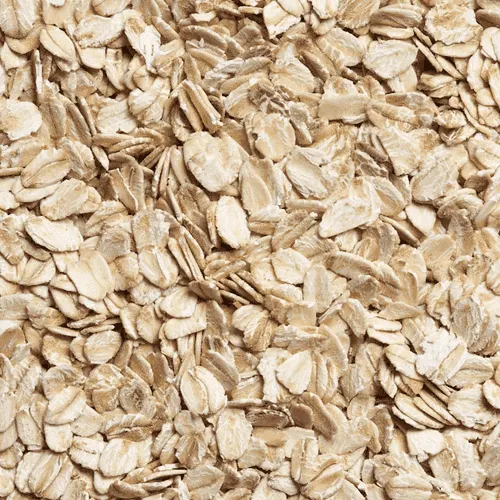
Other names Flocons d'avoine, Oat flakes
Rolled oats: low in FODMAPs, gluten, oligosaccharides, nickel and oxalates. If you're sensitive to any of these, check it against your profile before eating.
Intolerances
- FODMAPsLow
Rolled oats are low at half a cup and moderate above it, and the measured figure sits behind that: 0.11 g of fructan per portion as eaten, against 1.12 for couscous at the top of the same table. Oats are not a low-FODMAP food by concentration - they are one by the size of a sensible bowl.
Sources· 1
- Biesiekierski J. et al., J Hum Nutr Diet 24:2 (2011) 154-176, fructans and galacto-oligosaccharides per portion as eaten in 55 grain products across 55 grain products
- GlutenPossible
Rolled oats are steamed and flattened, which changes the texture and nothing about the contamination - the wheat that got in did so in the field and the mill, before the rolling. Certified rolled oats exist and are the only version a coeliac diet accepts. Certification answers contamination and not everything else: both associations say uncontaminated oats suit MOST coeliacs rather than all, because a minority react to the avenin itself.
Sources· 3
- AFDIAG (France) — les trois céréales interdites (blé, orge, seigle et leurs hybrides) et l'avoine non contaminée « consommable par presque tous les cœliaques »
- Coeliac UK — “Oats can be eaten by most people with coeliac disease but only if they're marked as ‘gluten free’”
- Commission Implementing Regulation (EU) No 828/2014, which sets the conditions for oats in gluten-free food
- OligosaccharidesFODMAPsLow
Oats carry a small amount of fructan - less than wheat, more than rice - so the level is a serving-size answer rather than a categorical one. Half a cup dry is the usual line, and porridge made with a full cup crosses it.
- NickelLow
Rolled oats are whole oats flattened, so they keep the bran - and oats are a high-nickel grain. They sit here rather than higher because rolling is not milling: the flake is a portion, not a flour.
Sources· 1
- Flyvholm M-A et al., Z Lebensm Unters Forsch 179 (1984) 427-431, nickel content of food and estimates of dietary intake
- OxalatesLow
Rolled oats are the whole grain flattened rather than separated, so the bran — where a grain keeps its oxalate — is still there. Rolling changes the cooking time and nothing on this axis. The oat is also high in phytate, which binds calcium and so leaves more of the oxalate in the soluble form.
Sources· 1
- Noonan S.C. & Savage G.P., Asia Pac J Clin Nutr 8:1 (1999) 64-74, oxalate content of foods and its effect on humans
- LactoseFODMAPsNone
- Histamine (+liberators / DAO inhibitors)None
- FructoseFODMAPsNone
- SorbitolFODMAPsNone
- SucroseNone
- TyramineNone
- SalicylateNone
Intolerance levels are based on our documented scientific sources. See sources →
React to FODMAPs? Check these too








More in Grains
 Amaranth
 Barley
 Basmati rice
 Brown rice
 Buckwheat
 Bulgur
 Corn
Corn Corn bran
 Cornmeal
 Couscous
 Durum wheat
- Jasmine rice
Frequently asked questions
Which intolerances does Rolled oats affect?
Rolled oats is notable for FODMAPs, gluten, oligosaccharides, nickel and oxalates. Clear on lactose, histamine, fructose, sorbitol, sucrose, tyramine and salicylate.
Does Rolled oats contain FODMAPs?
Rolled oats contains only low levels of FODMAPs. Rolled oats are low at half a cup and moderate above it, and the measured figure sits behind that: 0.11 g of fructan per portion as eaten, against 1.12 for couscous at the top of the same table. Oats are not a low-FODMAP food by concentration - they are one by the size of a sensible bowl.
Does Rolled oats contain gluten?
Rolled oats contains only low levels of gluten. Rolled oats are steamed and flattened, which changes the texture and nothing about the contamination - the wheat that got in did so in the field and the mill, before the rolling. Certified rolled oats exist and are the only version a coeliac diet accepts. Certification answers contamination and not everything else: both associations say uncontaminated oats suit MOST coeliacs rather than all, because a minority react to the avenin itself.
Does Rolled oats contain oligosaccharides?
Rolled oats contains only low levels of oligosaccharides. Oats carry a small amount of fructan - less than wheat, more than rice - so the level is a serving-size answer rather than a categorical one. Half a cup dry is the usual line, and porridge made with a full cup crosses it.
Does Rolled oats contain nickel?
Rolled oats contains only low levels of nickel. Rolled oats are whole oats flattened, so they keep the bran - and oats are a high-nickel grain. They sit here rather than higher because rolling is not milling: the flake is a portion, not a flour. Amounts vary by brand and recipe, so always check the label of the exact product.
Check any product in seconds
Scan a barcode with the Yllo app and see straight away whether a product fits your intolerances.