Bitter gourd
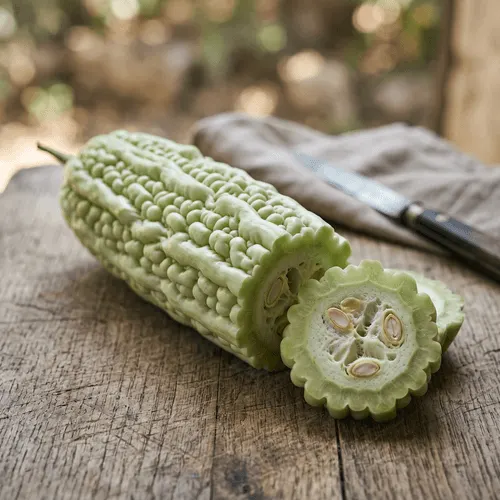
Other names karela, bitter melon
Bitter gourd: moderate in FODMAPs and oligosaccharides. If you're sensitive to any of these, check it against your profile before eating.
Intolerances
- FODMAPsModerate
Bitter gourd carries its FODMAPs as galacto-oligosaccharides and not as fructans: Prichard measured 1.12 g of GOS per 100 g and detected no fructans at all. GOS are the class that legumes carry, which is unusual for a vegetable and is what puts this gourd on the axis rather than its sugars - it is barely sweet. The figure is per 100 g, and a bitter gourd is normally eaten stuffed or stir-fried in modest quantity.
Sources· 2
- Prichard R et al., Int J Food Sci Nutr 67 (2016) 383-390, FODMAP content of foods commonly consumed by ethnic minority groups
- contents per 100 g, not per serve
- OligosaccharidesFODMAPsModerate
Bitter gourd's oligosaccharides are galacto-oligosaccharides: 1.12 g per 100 g in Prichard's measurement, with no fructans detected. That split matters on this axis, because the two classes are absorbed by different routes and a diet that limits one does not necessarily limit the other.
Sources· 2
- Prichard R et al., Int J Food Sci Nutr 67 (2016) 383-390, FODMAP content of foods commonly consumed by ethnic minority groups
- contents per 100 g, not per serve
- LactoseFODMAPsNone
- GlutenNo
- Histamine (+liberators / DAO inhibitors)None
- FructoseFODMAPsNone
- SorbitolFODMAPsNone
- SucroseNone
- TyramineNone
- SalicylateNone
- NickelNone
- OxalatesNone
Intolerance levels are based on our documented scientific sources. See sources →
React to FODMAPs? Check these too








More in Vegetables
 Artichoke
 Artichoke heart
 Bamboo shoots
 Beetroot
 Black beans
 Broccoli
 Brussels sprouts
 Cabbage
 Carrot
 Cassava
 Cauliflower
 Celery
Frequently asked questions
Which intolerances does bitter gourd affect?
Bitter gourd is notable for FODMAPs and oligosaccharides. Clear on lactose, gluten, histamine, fructose, sorbitol, sucrose, tyramine, salicylate, nickel and oxalates.
Does bitter gourd contain FODMAPs?
Bitter gourd contains moderate levels of FODMAPs. Bitter gourd carries its FODMAPs as galacto-oligosaccharides and not as fructans: Prichard measured 1.12 g of GOS per 100 g and detected no fructans at all. GOS are the class that legumes carry, which is unusual for a vegetable and is what puts this gourd on the axis rather than its sugars - it is barely sweet. The figure is per 100 g, and a bitter gourd is normally eaten stuffed or stir-fried in modest quantity.
Does bitter gourd contain oligosaccharides?
Bitter gourd contains moderate levels of oligosaccharides. Bitter gourd's oligosaccharides are galacto-oligosaccharides: 1.12 g per 100 g in Prichard's measurement, with no fructans detected. That split matters on this axis, because the two classes are absorbed by different routes and a diet that limits one does not necessarily limit the other. Amounts vary by brand and recipe, so always check the label of the exact product.
Check any product in seconds
Scan a barcode with the Yllo app and see straight away whether a product fits your intolerances.