Xylitol
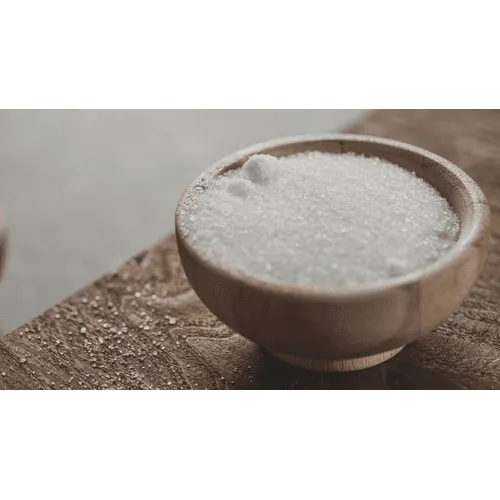
Other names E967, Birch sugar
Xylitol: high in FODMAPs and sorbitol; low in nickel. If you're sensitive to any of these, check it against your profile before eating.
Intolerances
- FODMAPsHigh
Xylitol is a polyol - a sugar alcohol - and a poorly absorbed FODMAP that ferments in the gut, commonly causing bloating and a laxative effect. Even the small amounts used in sugar-free products can be high in FODMAPs.
- SorbitolFODMAPsHigh
Xylitol is a polyol, and where a polyol sits on this axis is a question about how much of it survives the small intestine. For xylitol there is a controlled answer rather than an inference: in a randomised, double-blind, placebo-controlled trial in 64 adults, a single 50 g dose in water significantly raised nausea, bloating, borborygmi, colic, watery stools and bowel-movement frequency against a sucrose control - and 35 g was already enough to increase the passing of watery stools. At every dose tested it produced significantly more watery stools than erythritol. Those are BOLUS doses in water, which is not how anyone eats a sweetener, so read them as a ranking of the polyols rather than as a serving size.
Sources· 1
- Storey D. et al., Eur J Clin Nutr 61:3 (2007) 349-354, gastrointestinal tolerance of erythritol and xylitol ingested in a liquid
- NickelLow
Xylitol carries a trace of nickel for a reason written into the law that governs it. E 967 is made by CATALYTIC HYDROGENATION and the catalyst is nickel - the regulation says so in its own text - so its purity criteria carry a nickel limit of 2 mg/kg on the dry weight basis. That is a legal CEILING and not a content: what a given batch actually holds is not published, and 2 mg/kg is an order of magnitude below the foods that lead this axis. But a ceiling exists because a trace is expected.
Sources· 1
- Regulation (EU) No 231/2012, Annex, purity criteria per additive — nickel specified for the hydrogenated polyols
- LactoseFODMAPsNone
- Histamine (+liberators / DAO inhibitors)None
- GlutenNone
- FructoseFODMAPsNone
- OligosaccharidesFODMAPsNone
- SucroseNone
- TyramineNone
- SalicylateNone
- OxalatesNone
Intolerance levels are based on our documented scientific sources. See sources →
Note about this food
xylitol is poorly absorbed, our gut bacteria rapidly ferment it, which leads to Irritable Bowel Syndrome symptoms FODMAP: this is a polyol (sugar alcohol), a FODMAP that is poorly absorbed and ferments in the gut, often causing bloating and a laxative effect. Even small amounts in sugar-free products can be high FODMAP.
React to FODMAPs? Check these too








More in Sweeteners
 Acesulfame K
- Advantame
 Agave syrup
- Alitame
- Aspartame
- Aspartame Acesulfame salt
 Brown rice syrup
 Brown sugar
- Cane sugar
- Coconut sugar
- Cyclamic acid
- Dextrose
Frequently asked questions
Which intolerances does xylitol affect?
Xylitol is notable for FODMAPs, sorbitol and nickel. Clear on lactose, histamine, gluten, fructose, oligosaccharides, sucrose, tyramine, salicylate and oxalates.
Does xylitol contain FODMAPs?
Yes — xylitol is high in FODMAPs. Xylitol is a polyol - a sugar alcohol - and a poorly absorbed FODMAP that ferments in the gut, commonly causing bloating and a laxative effect. Even the small amounts used in sugar-free products can be high in FODMAPs.
Does xylitol contain sorbitol?
Yes — xylitol is high in sorbitol. Xylitol is a polyol, and where a polyol sits on this axis is a question about how much of it survives the small intestine. For xylitol there is a controlled answer rather than an inference: in a randomised, double-blind, placebo-controlled trial in 64 adults, a single 50 g dose in water significantly raised nausea, bloating, borborygmi, colic, watery stools and bowel-movement frequency against a sucrose control - and 35 g was already enough to increase the passing of watery stools. At every dose tested it produced significantly more watery stools than erythritol. Those are BOLUS doses in water, which is not how anyone eats a sweetener, so read them as a ranking of the polyols rather than as a serving size.
Does xylitol contain nickel?
Xylitol contains only low levels of nickel. Xylitol carries a trace of nickel for a reason written into the law that governs it. E 967 is made by CATALYTIC HYDROGENATION and the catalyst is nickel - the regulation says so in its own text - so its purity criteria carry a nickel limit of 2 mg/kg on the dry weight basis. That is a legal CEILING and not a content: what a given batch actually holds is not published, and 2 mg/kg is an order of magnitude below the foods that lead this axis. But a ceiling exists because a trace is expected. Amounts vary by brand and recipe, so always check the label of the exact product.
Check any product in seconds
Scan a barcode with the Yllo app and see straight away whether a product fits your intolerances.