Sultana
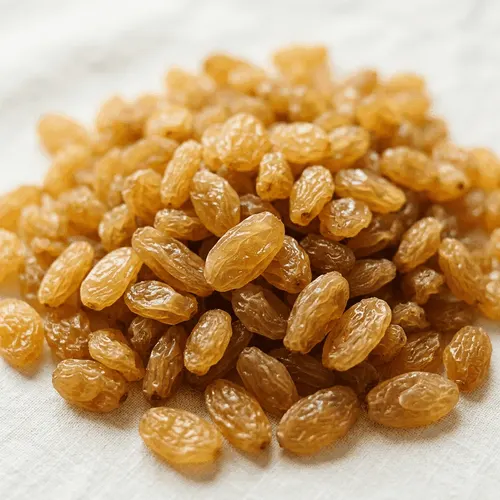
Other names Thompson seedless, sultanina
Sultana: high in FODMAPs and oligosaccharides; moderate in salicylate; low in histamine, tyramine and oxalates. If you're sensitive to any of these, check it against your profile before eating.
Intolerances
- FODMAPsHigh
Sultanas are raisins from a seedless white grape, and they answer the same way - fructans, and a threshold measured in a tablespoon. They appear in cereal, baking and curry, which is three chances a day to pass it.
Sources· 1
- Muir J et al., J Agric Food Chem 55 (2007) 6619-6627 and 57 (2009) 554-565, fructans and short-chain carbohydrates measured in Australian vegetables and fruit
- OligosaccharidesFODMAPsHigh
Sultana: same reason as the FODMAP level: dried grapes concentrate fructans, and it is the fructans rather than the sugar that decide this axis. A tablespoon is a lot of grapes, and the chains came with all of them.
- SalicylateModerate
Same salicylate concentration effect as any raisin, with one addition: sultanas are commonly treated with sulfites to keep them pale, which is a separate trigger frequently cut at the same time.
Sources· 1
- Scotter M.J. et al., Food Chemistry 105 (2007), free and acetyl salicylic acid in foods by GC-MS, and Venema D. et al., J Agric Food Chem 44 (1996), acetylsalicylic and salicylic acid in foods by HPLC
- Histamine (+liberators / DAO inhibitors)Low
A sultana starts from a low-histamine fresh fruit, and drying concentrates rather than creates: the water leaves and everything else stays. Sun-dried fruit has had more warm hours than kiln-dried, which is the variable no label records.
Sources· 1
- SIGHI — Swiss Interest Group Histamine Intolerance, food-compatibility list, for the entry, its rating and its letters
- TyramineLow
Sultanas carry little tyramine. The grape becomes a tyramine question when it is fermented into wine, and a raisin is the dried fruit rather than the fermented one.
Sources· 1
- Sen N.P., Journal of Food Science 34 (1969) 22-26, per-food tyramine content
- OxalatesLow
Sultanas are low in oxalate, and they are a dried grape eaten like a condiment - scattered into baking, muesli or a tagine, rarely eaten alone. The small scatter is the serving, and it keeps the total low.
Sources· 1
- Noonan S.C. & Savage G.P., Asia Pac J Clin Nutr 8:1 (1999) 64-74, oxalate content of foods and its effect on humans
- SucroseNone
- LactoseFODMAPsNone
- SorbitolFODMAPsNone
- FructoseFODMAPsNone
- NickelNone
- GlutenNone
Intolerance levels are based on our documented scientific sources. See sources →
React to FODMAPs? Check these too
More in Fruits
 Acorn squash
 Apple
Apple Apricot
 Apricot canned
 Aubergine
 Avocado
 Banana
 Bell pepper
 Blackberry
 Blackcurrant
 Blood orange
 Blueberry
Frequently asked questions
Which intolerances does sultana affect?
Sultana is notable for FODMAPs, oligosaccharides, salicylate, histamine, tyramine and oxalates. Clear on sucrose, lactose, sorbitol, fructose, nickel and gluten.
Does sultana contain FODMAPs?
Yes — sultana is high in FODMAPs. Sultanas are raisins from a seedless white grape, and they answer the same way - fructans, and a threshold measured in a tablespoon. They appear in cereal, baking and curry, which is three chances a day to pass it.
Does sultana contain oligosaccharides?
Yes — sultana is high in oligosaccharides. Sultana: same reason as the FODMAP level: dried grapes concentrate fructans, and it is the fructans rather than the sugar that decide this axis. A tablespoon is a lot of grapes, and the chains came with all of them.
Does sultana contain salicylate?
Sultana contains moderate levels of salicylate. Same salicylate concentration effect as any raisin, with one addition: sultanas are commonly treated with sulfites to keep them pale, which is a separate trigger frequently cut at the same time.
Does sultana contain histamine?
Sultana contains only low levels of histamine. A sultana starts from a low-histamine fresh fruit, and drying concentrates rather than creates: the water leaves and everything else stays. Sun-dried fruit has had more warm hours than kiln-dried, which is the variable no label records. Amounts vary by brand and recipe, so always check the label of the exact product.
Check any product in seconds
Scan a barcode with the Yllo app and see straight away whether a product fits your intolerances.