Potato
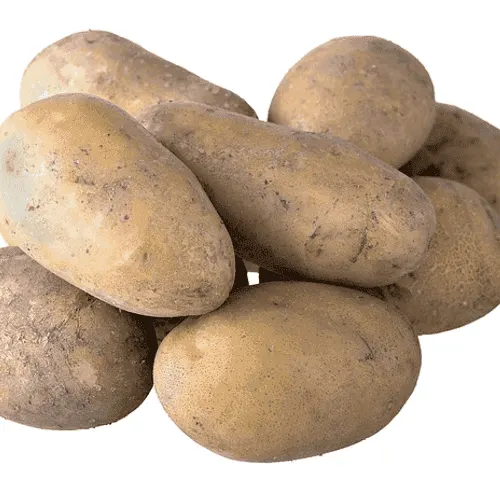
Other names potatoes
Potato: high in oxalates; low in salicylate. If you're sensitive to any of these, check it against your profile before eating.
Intolerances
- OxalatesHigh
Potato sits high here largely because of the skin: the oxalate is concentrated in it and just under it, so a jacket potato eaten whole and a peeled boiled one are not the same food on this axis. Boiling and pouring the water away is the lever that works, since the soluble fraction leaves with it, and peeling first removes most of what would have leached anyway. Cultivar does change the content, but no published measurement ranks red potatoes against white, and skin colour is not a reliable guide to cultivar.
Sources· 2
- Chai W & Liebman M, J Agric Food Chem 53 (2005), 3027-3030
- Noonan SC & Savage GP, Asia Pac J Clin Nutr 8 (1999)
- SalicylateLow
Peeled white potato is reported at zero salicylate — one of the few foods that reaches nothing at all. The skin is where it is, so peeling is not optional here. How it is cooked moves the phenolic content, and this vegetable is one of the four that were measured. Deep frying and sautéing RAISED total phenols; both kinds of boiling lowered them. Frying in extra virgin olive oil also transfers the oil's own phenols into the food - oleuropein, hydroxytyrosol, tyrosol, pinoresinol - so the dish is not simply the vegetable. All the methods preserved or raised antioxidant capacity. These are PHENOLS in general, though: the study measured eighteen of them and salicylic acid is not the subject.
Sources· 1
- Ramirez-Anaya J. del P. et al., Food Chem 188 (2015) 430-438, phenols and antioxidant capacity of Mediterranean vegetables cooked in extra virgin olive oil
- Histamine (+liberators / DAO inhibitors)None
Potatoes are eaten cooked and fresh, and a fresh tuber has had no fermentation step — which is what this axis counts. The processed forms are where a question enters: crisps, dehydrated flakes and ready-made purées may carry sulfites, a separate sensitivity that travels with this one.
- TyramineNone
- SucroseNone
- FODMAPsNone
The potato sits at the bottom of the measured range rather than by assumption: Biesiekierski quantified fructans per portion as eaten across fifty-five grains, breads, cereals and pulses, and potato chips came out at 0.05 grams a portion — against couscous at 1.12, the highest of the fifty-five. Rice was the only thing lower, at zero. The potato is not where a FODMAP load comes from; what is done to it can be, and the note on any dressed or creamed version is the one to read.
Sources· 1
- Biesiekierski J et al., J Hum Nutr Diet 24 (2011) 154-176, fructans and galacto-oligosaccharides per portion as eaten
- LactoseFODMAPsNone
- OligosaccharidesFODMAPsNone
- SorbitolFODMAPsNone
- FructoseFODMAPsNone
- NickelNone
- GlutenNo
Intolerance levels are based on our documented scientific sources. See sources →
React to Oxalates? Check these too









More in Vegetables
 Artichoke
 Artichoke heart
 Bamboo shoots
 Beetroot
 Bitter gourd
 Black beans
 Broccoli
 Brussels sprouts
 Cabbage
 Carrot
 Cassava
 Cauliflower
Frequently asked questions
Which intolerances does potato affect?
Potato is notable for oxalates and salicylate. Clear on histamine, tyramine, sucrose, FODMAPs, lactose, oligosaccharides, sorbitol, fructose, nickel and gluten.
Does potato contain oxalates?
Yes — potato is high in oxalates. Potato sits high here largely because of the skin: the oxalate is concentrated in it and just under it, so a jacket potato eaten whole and a peeled boiled one are not the same food on this axis. Boiling and pouring the water away is the lever that works, since the soluble fraction leaves with it, and peeling first removes most of what would have leached anyway. Cultivar does change the content, but no published measurement ranks red potatoes against white, and skin colour is not a reliable guide to cultivar.
Does potato contain salicylate?
Potato contains only low levels of salicylate. Peeled white potato is reported at zero salicylate — one of the few foods that reaches nothing at all. The skin is where it is, so peeling is not optional here. How it is cooked moves the phenolic content, and this vegetable is one of the four that were measured. Deep frying and sautéing RAISED total phenols; both kinds of boiling lowered them. Frying in extra virgin olive oil also transfers the oil's own phenols into the food - oleuropein, hydroxytyrosol, tyrosol, pinoresinol - so the dish is not simply the vegetable. All the methods preserved or raised antioxidant capacity. These are PHENOLS in general, though: the study measured eighteen of them and salicylic acid is not the subject. Amounts vary by brand and recipe, so always check the label of the exact product.
Check any product in seconds
Scan a barcode with the Yllo app and see straight away whether a product fits your intolerances.