Parsnip
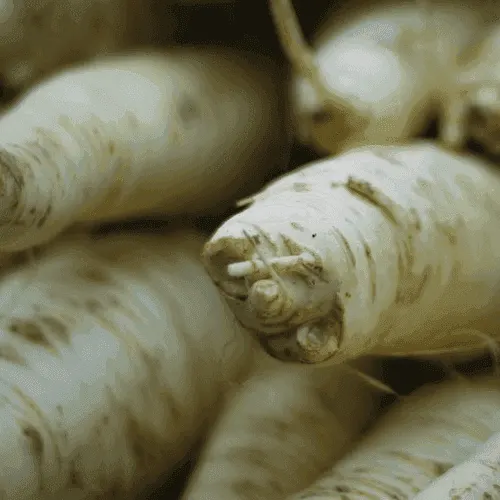
Parsnip: low in salicylate, FODMAPs, oligosaccharides and nickel. If you're sensitive to any of these, check it against your profile before eating.
Intolerances
- SalicylateLow
Peeled parsnip is low. Roasting it unpeeled — a common way to cook it — keeps the skin and the salicylate with it.
- FODMAPsLow
Parsnip is low at a normal serving and stops being low above one - the threshold is around a small portion. That is the shape of this whole axis: it publishes serving limits rather than verdicts, because the fructan or polyol load scales with how much you eat and there is no amount that is free.
Sources· 1
- Muir J et al., J Agric Food Chem 55 (2007) 6619-6627 and 57 (2009) 554-565, fructans and short-chain carbohydrates measured in Australian vegetables and fruit
- OligosaccharidesFODMAPsLow
Parsnip is a root that stores starch rather than fructan, which is what separates it from the chicory root it resembles. Two roots that look alike can store their winter reserve in completely different molecules.
- NickelLow
Parsnip is a true root and sits in the soil all season, which is why it carries more than the leaves above it. It is still low, because the metal concentrates in the skin that gets peeled away. The nickel here follows a survey of heavy metals in VEGETABLES. A vegetable takes up what its soil holds, so a figure of this kind describes the growing region as much as the plant.
Sources· 1
- Guerra F. et al., Scientia Agricola 69:1 (2012) 54-60, heavy metals in vegetables
- Histamine (+liberators / DAO inhibitors)None
- TyramineNone
- SucroseNone
- LactoseFODMAPsNone
- SorbitolFODMAPsNone
- FructoseFODMAPsNone
- OxalatesNone
- GlutenNo
Intolerance levels are based on our documented scientific sources. See sources →
React to Salicylate? Check these too










More in Vegetables
 Artichoke
 Artichoke heart
 Bamboo shoots
 Beetroot
 Bitter gourd
 Black beans
 Broccoli
 Brussels sprouts
 Cabbage
 Carrot
 Cassava
 Cauliflower
Frequently asked questions
Which intolerances does parsnip affect?
Parsnip is notable for salicylate, FODMAPs, oligosaccharides and nickel. Clear on histamine, tyramine, sucrose, lactose, sorbitol, fructose, oxalates and gluten.
Does parsnip contain salicylate?
Parsnip contains only low levels of salicylate. Peeled parsnip is low. Roasting it unpeeled — a common way to cook it — keeps the skin and the salicylate with it.
Does parsnip contain FODMAPs?
Parsnip contains only low levels of FODMAPs. Parsnip is low at a normal serving and stops being low above one - the threshold is around a small portion. That is the shape of this whole axis: it publishes serving limits rather than verdicts, because the fructan or polyol load scales with how much you eat and there is no amount that is free.
Does parsnip contain oligosaccharides?
Parsnip contains only low levels of oligosaccharides. Parsnip is a root that stores starch rather than fructan, which is what separates it from the chicory root it resembles. Two roots that look alike can store their winter reserve in completely different molecules.
Does parsnip contain nickel?
Parsnip contains only low levels of nickel. Parsnip is a true root and sits in the soil all season, which is why it carries more than the leaves above it. It is still low, because the metal concentrates in the skin that gets peeled away. The nickel here follows a survey of heavy metals in VEGETABLES. A vegetable takes up what its soil holds, so a figure of this kind describes the growing region as much as the plant. Amounts vary by brand and recipe, so always check the label of the exact product.
Check any product in seconds
Scan a barcode with the Yllo app and see straight away whether a product fits your intolerances.