Isomalt
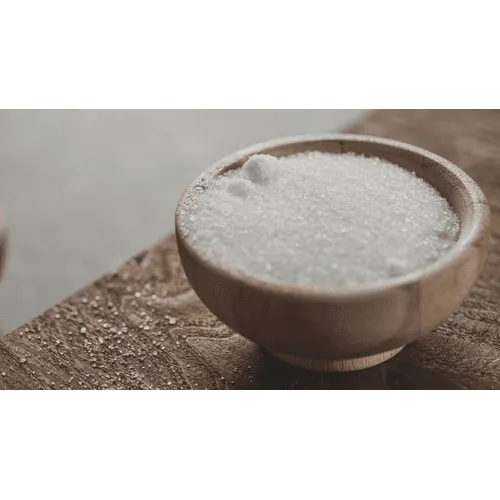
Other names E953
Isomalt: high in FODMAPs and sorbitol; low in nickel. If you're sensitive to any of these, check it against your profile before eating.
Intolerances
- FODMAPsHigh
Isomalt is the polyol of hard sweets and lozenges, chosen because it resists heat without browning and does not draw moisture. It is absorbed less than maltitol, so more of it ferments - the trade-off for a mint that keeps its shape.
Sources· 2
- Lenhart A. & Chey W.D., Adv Nutr 8 (2017) 587-596, systematic review of the effects of polyols
- Regulation (EC) No 1333/2008, Annexes II and V, the authorised additives and their conditions of use
- SorbitolFODMAPsHigh
Isomalt is a polyol used mostly in hard sweets and lozenges, where it does not melt or brown. Same fermentation in the colon as sorbitol, same dose dependence.
Sources· 2
- Lenhart A. & Chey W.D., Adv Nutr 8 (2017) 587-596, a systematic review of 79 studies on the effects of polyols
- Zumbé A et al., Br J Nutr 85 Suppl. 1 (2001) S31-45, polyols in confectionery
- NickelLow
Isomalt carries a trace of nickel for a reason written into the law that governs it. E 953 is made by CATALYTIC HYDROGENATION and the catalyst is nickel - the regulation says so in its own text - so its purity criteria carry a nickel limit of 2 mg/kg on the dry weight basis. That is a legal CEILING and not a content: what a given batch actually holds is not published, and 2 mg/kg is an order of magnitude below the foods that lead this axis. But a ceiling exists because a trace is expected.
Sources· 1
- Regulation (EU) No 231/2012, Annex, purity criteria per additive — nickel specified for the hydrogenated polyols
- Histamine (+liberators / DAO inhibitors)None
- TyramineNone
- SalicylateNone
- SucroseNone
- LactoseFODMAPsNone
- OligosaccharidesFODMAPsNone
- FructoseFODMAPsNone
- OxalatesNone
- GlutenNo
Intolerance levels are based on our documented scientific sources. See sources →
React to FODMAPs? Check these too








More in Sweeteners
 Acesulfame K
- Advantame
 Agave syrup
- Alitame
- Aspartame
- Aspartame Acesulfame salt
 Brown rice syrup
 Brown sugar
- Cane sugar
- Coconut sugar
- Cyclamic acid
- Dextrose
Frequently asked questions
Which intolerances does Isomalt affect?
Isomalt is notable for FODMAPs, sorbitol and nickel. Clear on histamine, tyramine, salicylate, sucrose, lactose, oligosaccharides, fructose, oxalates and gluten.
Does Isomalt contain FODMAPs?
Yes — Isomalt is high in FODMAPs. Isomalt is the polyol of hard sweets and lozenges, chosen because it resists heat without browning and does not draw moisture. It is absorbed less than maltitol, so more of it ferments - the trade-off for a mint that keeps its shape.
Does Isomalt contain sorbitol?
Yes — Isomalt is high in sorbitol. Isomalt is a polyol used mostly in hard sweets and lozenges, where it does not melt or brown. Same fermentation in the colon as sorbitol, same dose dependence.
Does Isomalt contain nickel?
Isomalt contains only low levels of nickel. Isomalt carries a trace of nickel for a reason written into the law that governs it. E 953 is made by CATALYTIC HYDROGENATION and the catalyst is nickel - the regulation says so in its own text - so its purity criteria carry a nickel limit of 2 mg/kg on the dry weight basis. That is a legal CEILING and not a content: what a given batch actually holds is not published, and 2 mg/kg is an order of magnitude below the foods that lead this axis. But a ceiling exists because a trace is expected. Amounts vary by brand and recipe, so always check the label of the exact product.
Check any product in seconds
Scan a barcode with the Yllo app and see straight away whether a product fits your intolerances.