Erythritol
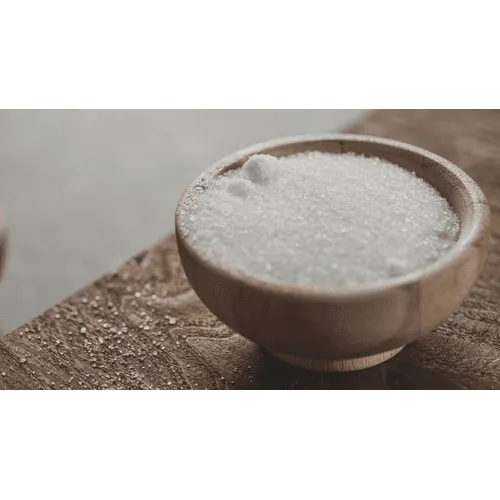
Other names Érythritol, E968
Erythritol: low in FODMAPs and sorbitol. If you're sensitive to any of these, check it against your profile before eating.
Intolerances
- FODMAPsLow
Erythritol is the polyol that breaks the rule. Sorbitol, mannitol, maltitol and xylitol are all high here because they are poorly absorbed and ferment; erythritol is about ninety percent absorbed in the small intestine and leaves in the urine. Very little reaches the bacteria, which is why it is the sugar alcohol most people tolerate.
Sources· 2
- Lenhart A. & Chey W.D., Adv Nutr 8 (2017) 587-596, systematic review of the effects of polyols
- Regulation (EC) No 1333/2008, Annexes II and V, the authorised additives and their conditions of use
- SorbitolFODMAPsLow
Erythritol is a polyol, but the exception among them: roughly 90% is absorbed in the small intestine and leaves in the urine, so very little reaches the bacteria that ferment the others. That tolerance was measured rather than assumed. In a randomised, double-blind, placebo-controlled trial in 64 adults, 20 g and 35 g of erythritol in water produced NO significant symptoms at all, and 50 g raised only nausea and borborygmi - where the same 50 g of xylitol raised six different complaints. At every dose tested, erythritol gave significantly fewer watery stools than xylitol. The doses are single boluses in water, which flatters nothing: it is the hardest form to tolerate.
Sources· 3
- Lenhart A. & Chey W.D., Adv Nutr 8 (2017) 587-596, a systematic review of 79 studies on the effects of polyols
- Zumbé A et al., Br J Nutr 85 Suppl. 1 (2001) S31-45, polyols in confectionery
- Storey D. et al., Eur J Clin Nutr 61:3 (2007) 349-354, gastrointestinal tolerance of erythritol and xylitol ingested in a liquid
- Histamine (+liberators / DAO inhibitors)None
- TyramineNone
- SalicylateNone
- SucroseNone
- LactoseFODMAPsNone
- OligosaccharidesFODMAPsNone
- FructoseFODMAPsNone
Erythritol contains no fructose — it is a polyol, and no polyol carries fructose. Its own issue is different: about 90% is absorbed in the small intestine, which is why it troubles fewer people than the other sugar alcohols.
- NickelNone
Erythritol carries no nickel where the other polyols do, and the difference is in how it is made. The polyols are made by catalytic hydrogenation over nickel, and the regulation governing them sets a nickel limit for each. Erythritol is made by FERMENTATION with osmophilic yeasts, its entry in that same regulation carries no nickel criterion at all, and there is no catalyst to leave a trace.
Sources· 1
- Regulation (EU) No 231/2012, Annex, purity criteria per additive — nickel specified for the hydrogenated polyols
- OxalatesNone
- GlutenNo
Intolerance levels are based on our documented scientific sources. See sources →
React to FODMAPs? Check these too








More in Sweeteners
 Acesulfame K
- Advantame
 Agave syrup
- Alitame
- Aspartame
- Aspartame Acesulfame salt
 Brown rice syrup
 Brown sugar
- Cane sugar
- Coconut sugar
- Cyclamic acid
- Dextrose
Frequently asked questions
Which intolerances does Erythritol affect?
Erythritol is notable for FODMAPs and sorbitol. Clear on histamine, tyramine, salicylate, sucrose, lactose, oligosaccharides, fructose, nickel, oxalates and gluten.
Does Erythritol contain FODMAPs?
Erythritol contains only low levels of FODMAPs. Erythritol is the polyol that breaks the rule. Sorbitol, mannitol, maltitol and xylitol are all high here because they are poorly absorbed and ferment; erythritol is about ninety percent absorbed in the small intestine and leaves in the urine. Very little reaches the bacteria, which is why it is the sugar alcohol most people tolerate.
Does Erythritol contain sorbitol?
Erythritol contains only low levels of sorbitol. Erythritol is a polyol, but the exception among them: roughly 90% is absorbed in the small intestine and leaves in the urine, so very little reaches the bacteria that ferment the others. That tolerance was measured rather than assumed. In a randomised, double-blind, placebo-controlled trial in 64 adults, 20 g and 35 g of erythritol in water produced NO significant symptoms at all, and 50 g raised only nausea and borborygmi - where the same 50 g of xylitol raised six different complaints. At every dose tested, erythritol gave significantly fewer watery stools than xylitol. The doses are single boluses in water, which flatters nothing: it is the hardest form to tolerate. Amounts vary by brand and recipe, so always check the label of the exact product.
Check any product in seconds
Scan a barcode with the Yllo app and see straight away whether a product fits your intolerances.