Dried plum
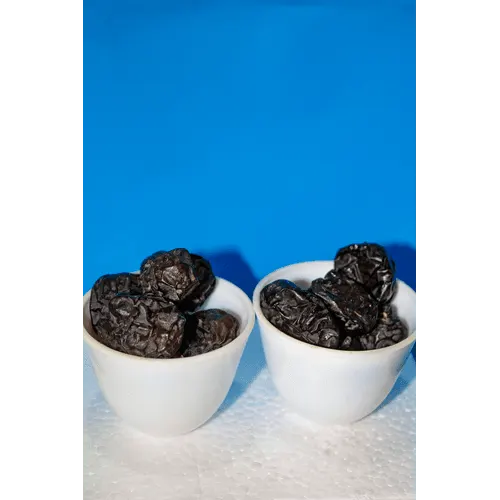
Other names Prunes
Dried plum: high in FODMAPs and sorbitol; moderate in histamine; low in tyramine, salicylate and nickel. If you're sensitive to any of these, check it against your profile before eating.
Intolerances
- FODMAPsHigh
Prunes are sold as a laxative, and the mechanism is the one this axis measures: sorbitol draws water into the bowel and ferments. Drying multiplied what the plum already had. Nothing here is a surprise, and the threshold is two or three.
Sources· 1
- Lenhart A. & Chey W.D., Adv Nutr 8 (2017) 587-596, systematic review of the effects of polyols
- SorbitolFODMAPsHigh
Prunes are the clearest demonstration of what drying does: the water leaves, the sorbitol stays, and what was a moderate fruit becomes a laxative sold as one.
Sources· 1
- Lenhart A. & Chey W.D., Adv Nutr 8 (2017) 587-596, a systematic review of 79 studies on the effects of polyols
- Histamine (+liberators / DAO inhibitors)Moderate
Drying concentrates everything, amines included, and prunes are a documented liberator on top. The dose is what catches people: a handful is a lot more fruit than it looks.
- TyramineLow
Prunes carry little tyramine. The amine is built by bacteria from tyrosine while a food ages or ferments, and drying a plum does neither - it takes away the water those bacteria would need.
Sources· 1
- Sen N.P., Journal of Food Science 34 (1969) 22-26, per-food tyramine content
- SalicylateLow
Prunes are dried plums, and drying concentrates the salicylate — so this sits above fresh plum despite the low rating. The portion is what keeps it manageable.
- NickelLow
Prunes concentrate the plum by removing its water, and a plum is a low-nickel fruit - so even concentrated it stays here. Drying is the whole question for nickel: water leaves and everything else stays, so a dried fruit carries the metal concentrated by weight. The level here follows a study of trace elements in DRIED fruit for that reason.
Sources· 1
- Duran A. et al., Int J Food Sci Nutr 59:7-8 (2008) 581-589, trace elements in dried fruit
- SucroseNone
- LactoseFODMAPsNone
- OligosaccharidesFODMAPsNone
- FructoseFODMAPsNone
- OxalatesNone
- GlutenNone
Intolerance levels are based on our documented scientific sources. See sources →
React to FODMAPs? Check these too






More in Fruits
 Acorn squash
 Apple
Apple Apricot
 Apricot canned
 Aubergine
 Avocado
 Banana
 Bell pepper
 Blackberry
 Blackcurrant
 Blood orange
 Blueberry
Frequently asked questions
Which intolerances does Dried plum affect?
Dried plum is notable for FODMAPs, sorbitol, histamine, tyramine, salicylate and nickel. Clear on sucrose, lactose, oligosaccharides, fructose, oxalates and gluten.
Does Dried plum contain FODMAPs?
Yes — Dried plum is high in FODMAPs. Prunes are sold as a laxative, and the mechanism is the one this axis measures: sorbitol draws water into the bowel and ferments. Drying multiplied what the plum already had. Nothing here is a surprise, and the threshold is two or three.
Does Dried plum contain sorbitol?
Yes — Dried plum is high in sorbitol. Prunes are the clearest demonstration of what drying does: the water leaves, the sorbitol stays, and what was a moderate fruit becomes a laxative sold as one.
Does Dried plum contain histamine?
Dried plum contains moderate levels of histamine. Drying concentrates everything, amines included, and prunes are a documented liberator on top. The dose is what catches people: a handful is a lot more fruit than it looks.
Does Dried plum contain tyramine?
Dried plum contains only low levels of tyramine. Prunes carry little tyramine. The amine is built by bacteria from tyrosine while a food ages or ferments, and drying a plum does neither - it takes away the water those bacteria would need. Amounts vary by brand and recipe, so always check the label of the exact product.
Check any product in seconds
Scan a barcode with the Yllo app and see straight away whether a product fits your intolerances.