Dried apricots
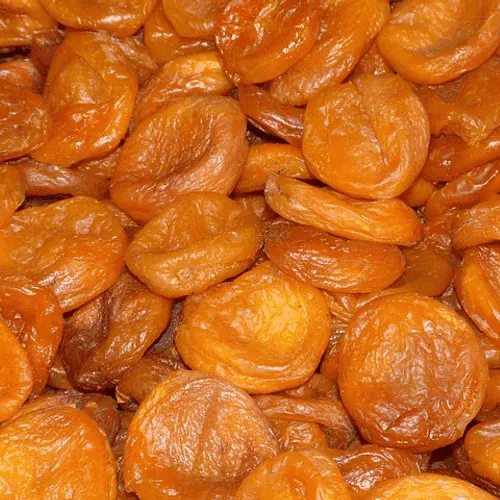
Dried apricots: high in FODMAPs; moderate in salicylate and sorbitol; low in histamine, tyramine, sucrose, oligosaccharides, oxalates and fructose. If you're sensitive to any of these, check it against your profile before eating.
Intolerances
- FODMAPsHigh
Dried apricots concentrate the fresh fruit's sorbitol several times over, and they are eaten as a snack rather than as fruit - which is how a threshold of about three gets passed without noticing. The sulphites are a separate question on a separate axis.
Sources· 2
- Muir J et al., J Agric Food Chem 55 (2007) 6619-6627 and 57 (2009) 554-565, fructans and short-chain carbohydrates measured in Australian vegetables and fruit
- Lenhart A. & Chey W.D., Adv Nutr 8 (2017) 587-596, systematic review of the effects of polyols
- SalicylateModerate
Drying is the whole story: the fresh apricot is milder, and removing the water leaves the same salicylate in a fraction of the weight. Sulphites are a separate trigger from salicylate, and the packet is where to check for them: sulphur dioxide and sulphites above 10 mg/kg are one of the fourteen entries of Annex II, so a label that does not name them is stating they are not there.
Sources· 2
- Scotter M.J. et al., Food Chemistry 105 (2007), free and acetyl salicylic acid in foods by GC-MS, and Venema D. et al., J Agric Food Chem 44 (1996), acetylsalicylic and salicylic acid in foods by HPLC
- Regulation (EU) No 1169/2011, Annex II, the fourteen substances a label must name
- SorbitolFODMAPsModerate
Dried apricots concentrate the fresh fruit's sorbitol, and the sulphited ones add a second issue for anyone sensitive to sulphites. Portion is everything here.
Sources· 1
- Lenhart A. & Chey W.D., Adv Nutr 8 (2017) 587-596, a systematic review of 79 studies on the effects of polyols
- Histamine (+liberators / DAO inhibitors)Low
A dried apricot starts from a low-histamine fresh fruit, and drying concentrates rather than creates: the water leaves and everything else stays. Sun-dried fruit has had more warm hours than kiln-dried, which is the variable no label records.
Sources· 1
- SIGHI — Swiss Interest Group Histamine Intolerance, food-compatibility list, for the entry, its rating and its letters
- TyramineLow
Dried apricots carry little tyramine. Drying concentrates what the fruit already held, and a fresh apricot held very little; the sulphites used to keep them orange are a separate question.
Sources· 1
- Sen N.P., Journal of Food Science 34 (1969) 22-26, per-food tyramine content
- SucroseLow
Dried apricots concentrate the fruit, but the apricot's sugar was never mostly sucrose - drying multiplies free glucose and fructose instead.
- OligosaccharidesFODMAPsLow
Dried apricots are high on the FODMAP axis for sorbitol - a polyol - and carry almost no chains. This is the clearest case of the two axes separating: everything that makes dried apricot a problem belongs to the P of the acronym, not the O. Fruit oligosaccharides are the part of this axis least visible on a label: they are not sweetness and not fibre in the usual sense, and two fruits that taste alike can differ several-fold. The level follows measurements made on fruit specifically.
Sources· 1
- Muir J. et al., J Agric Food Chem 55 (2007) and 57 (2009), and Jovanovic-Malinovska R. et al., Int J Food Prop 17 (2014), oligosaccharides in fruit
- OxalatesLow
Dried apricots are low in oxalate, but drying changed the arithmetic: the water is gone and everything else stayed, so a hundred grams of these is several fresh apricots. The handful, not the fruit, is the serving to count.
Sources· 1
- Noonan S.C. & Savage G.P., Asia Pac J Clin Nutr 8:1 (1999) 64-74, oxalate content of foods and its effect on humans
- FructoseFODMAPsLow
Dried apricots concentrate the fruit but the apricot is glucose-balanced to begin with, so concentrating it does not create a fructose excess. The sulphites used to keep them orange are a separate question.
- LactoseFODMAPsNone
- GlutenNone
- NickelNone
Intolerance levels are based on our documented scientific sources. See sources →
React to FODMAPs? Check these too






More in Fruits
 Acorn squash
 Apple
Apple Apricot
 Apricot canned
 Aubergine
 Avocado
 Banana
 Bell pepper
 Blackberry
 Blackcurrant
 Blood orange
 Blueberry
Frequently asked questions
Which intolerances does dried apricots affect?
Dried apricots is notable for FODMAPs, salicylate, sorbitol, histamine, tyramine, sucrose, oligosaccharides, oxalates and fructose. Clear on lactose, gluten and nickel.
Does dried apricots contain FODMAPs?
Yes — dried apricots is high in FODMAPs. Dried apricots concentrate the fresh fruit's sorbitol several times over, and they are eaten as a snack rather than as fruit - which is how a threshold of about three gets passed without noticing. The sulphites are a separate question on a separate axis.
Does dried apricots contain salicylate?
Dried apricots contains moderate levels of salicylate. Drying is the whole story: the fresh apricot is milder, and removing the water leaves the same salicylate in a fraction of the weight. Sulphites are a separate trigger from salicylate, and the packet is where to check for them: sulphur dioxide and sulphites above 10 mg/kg are one of the fourteen entries of Annex II, so a label that does not name them is stating they are not there.
Does dried apricots contain sorbitol?
Dried apricots contains moderate levels of sorbitol. Dried apricots concentrate the fresh fruit's sorbitol, and the sulphited ones add a second issue for anyone sensitive to sulphites. Portion is everything here.
Does dried apricots contain histamine?
Dried apricots contains only low levels of histamine. A dried apricot starts from a low-histamine fresh fruit, and drying concentrates rather than creates: the water leaves and everything else stays. Sun-dried fruit has had more warm hours than kiln-dried, which is the variable no label records. Amounts vary by brand and recipe, so always check the label of the exact product.
Check any product in seconds
Scan a barcode with the Yllo app and see straight away whether a product fits your intolerances.