Chokeberry
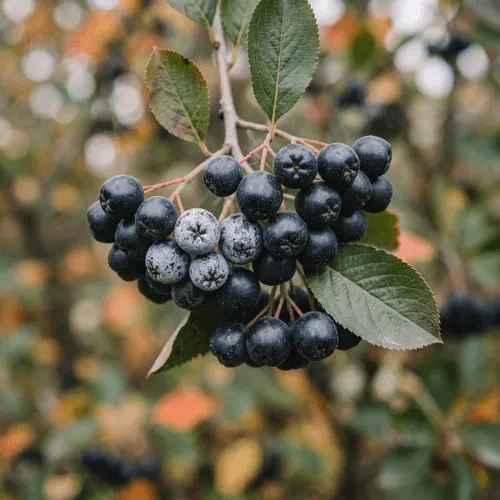
Other names aronia, Aronia melanocarpa
Chokeberry: moderate in FODMAPs, sorbitol and salicylate; low in fructose and oxalates. If you're sensitive to any of these, check it against your profile before eating.
Intolerances
- FODMAPsModerate
Chokeberry sits above the low berries because of its sorbitol, which is a polyol and counts on this axis whatever the fructose does. It is eaten dried or as juice more often than fresh, and both concentrate.
Sources· 1
- Mikulic-Petkovsek M et al., J Food Sci 77:10 (2012) C1064-C1070, sugars, organic acids and total phenolics in 25 berry species
- SorbitolFODMAPsModerate
Chokeberry carries sorbitol, and that is what separates it from most berries: Mikulic-Petkovsek found the polyol in three of twenty-five berry species, and this was one of them. No per-species figure is published, so the level is a placing rather than a measurement.
Sources· 1
- Mikulic-Petkovsek M et al., J Food Sci 77:10 (2012) C1064-C1070, sugars, organic acids and total phenolics in 25 berry species
- SalicylateModerate
Chokeberry is placed with the other berries for salicylate, which sit moderate. No assay covers the chokeberry itself; what can be said comes from the berries that have been measured.
- FructoseFODMAPsLow
Glucose and fructose are the dominant sugars of chokeberry, as they are of berries generally, and neither is in excess of the other — which is what this axis counts.
Sources· 1
- Mikulic-Petkovsek M et al., J Food Sci 77:10 (2012) C1064-C1070, sugars, organic acids and total phenolics in 25 berry species
- OxalatesLow
No published assay of oxalate reaches the chokeberry, and it is eaten whole with its seeds, which is where a berry keeps that compound. It is almost never eaten fresh — the astringency sends it to juice, powder and dried fruit, and each of those is many berries at once.
- LactoseFODMAPsNone
- Histamine (+liberators / DAO inhibitors)None
- GlutenNo
- OligosaccharidesFODMAPsNone
- SucroseNone
- TyramineNone
- NickelNone
Intolerance levels are based on our documented scientific sources. See sources →
React to FODMAPs? Check these too






More in Fruits
 Acorn squash
 Apple
Apple Apricot
 Apricot canned
 Aubergine
 Avocado
 Banana
 Bell pepper
 Blackberry
 Blackcurrant
 Blood orange
 Blueberry
Frequently asked questions
Which intolerances does chokeberry affect?
Chokeberry is notable for FODMAPs, sorbitol, salicylate, fructose and oxalates. Clear on lactose, histamine, gluten, oligosaccharides, sucrose, tyramine and nickel.
Does chokeberry contain FODMAPs?
Chokeberry contains moderate levels of FODMAPs. Chokeberry sits above the low berries because of its sorbitol, which is a polyol and counts on this axis whatever the fructose does. It is eaten dried or as juice more often than fresh, and both concentrate.
Does chokeberry contain sorbitol?
Chokeberry contains moderate levels of sorbitol. Chokeberry carries sorbitol, and that is what separates it from most berries: Mikulic-Petkovsek found the polyol in three of twenty-five berry species, and this was one of them. No per-species figure is published, so the level is a placing rather than a measurement.
Does chokeberry contain salicylate?
Chokeberry contains moderate levels of salicylate. Chokeberry is placed with the other berries for salicylate, which sit moderate. No assay covers the chokeberry itself; what can be said comes from the berries that have been measured.
Does chokeberry contain fructose?
Chokeberry contains only low levels of fructose. Glucose and fructose are the dominant sugars of chokeberry, as they are of berries generally, and neither is in excess of the other — which is what this axis counts. Amounts vary by brand and recipe, so always check the label of the exact product.
Check any product in seconds
Scan a barcode with the Yllo app and see straight away whether a product fits your intolerances.