Cherry
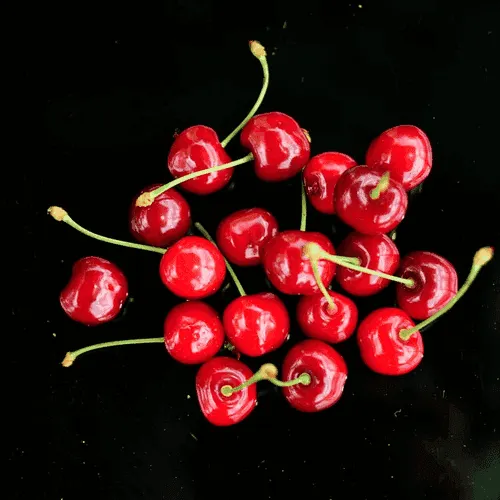
Other names cherries
Cherry: high in FODMAPs and sorbitol; low in salicylate and fructose. If you're sensitive to any of these, check it against your profile before eating.
Intolerances
- FODMAPsHigh
Cherry: this fruit is high in FODMAPs because it holds more fructose than glucose - excess fructose, a poorly absorbed FODMAP. The load is dose-dependent, so a small serving is often tolerated where a large one is not. The sugars behind this were measured on this fruit, in a study of four - peach, apple, watermelon and cherry - by HPLC. What it settles for this axis is presence and absence rather than a level: sorbitol was found in peach, apple and cherry and not in watermelon, and sucrose in peach, apple and watermelon and not in cherry. It publishes ranges across the four, never a value for one, so it cannot set a FODMAP level by itself.
Sources· 2
- Lenhart A. & Chey W.D., Adv Nutr 8 (2017) 587-596, systematic review of the effects of polyols
- Ma C. et al., Food Chem 145 (2014) 784-788, fructose, sorbitol, glucose and sucrose in fruits by HPLC-ELSD
- SorbitolFODMAPsHigh
Cherry combines sorbitol with excess fructose, the same double load as apple. A handful crosses the threshold quickly because the fruit is small and easy to keep eating. Ma found sorbitol in the cherry and no sucrose at all in it, which is the unusual half of that result; across the three sorbitol-bearing fruits of the four the values ran 8.70 to 19.13 mg per gram, a range rather than a value for the cherry.
Sources· 2
- Lenhart A. & Chey W.D., Adv Nutr 8 (2017) 587-596, a systematic review of 79 studies on the effects of polyols
- Ma C. et al., Food Chem 145 (2014) 784-788, fructose, sorbitol, glucose and sucrose in fruits by HPLC-ELSD
- SalicylateLow
Cherries are eaten whole with the skin, which is why their salicylate is not lower still. Sweet varieties sit below sour ones, and ripe below underripe.
- FructoseFODMAPsLow
Cherry carries fructose. It was one of four fruits measured by HPLC, and fructose was found in all four, from 5.79 to 104.01 mg per gram. The abstract gives that range across the four and no value for any single one.
Sources· 1
- Ma C. et al., Food Chem 145 (2014) 784-788, fructose, sorbitol, glucose and sucrose in fruits by HPLC-ELSD
- Histamine (+liberators / DAO inhibitors)None
Cherries are a short-season fruit, eaten fresh by the handful.
Sources· 1
- Maintz & Novak, Am J Clin Nutr 2007
- TyramineNone
- SucroseNone
The cherry was measured rather than assumed here: sucrose was determined in peach, apple and watermelon and NOT in cherry. The cherry's sugar is fructose and glucose, which is also why it behaves differently from the stone fruits it is usually grouped with.
Sources· 1
- Ma C. et al., Food Chem 145 (2014) 784-788, fructose, sorbitol, glucose and sucrose in fruits by HPLC-ELSD
- LactoseFODMAPsNone
- OligosaccharidesFODMAPsNone
- OxalatesNone
- GlutenNone
- NickelNone
Intolerance levels are based on our documented scientific sources. See sources →
Note about this food
There are two types of cherries: sweet and sour. Sweet cherries generally have more fructose and contain much more sorbitol than sour cherries FODMAP: this fruit is high because it holds more fructose than glucose (excess fructose), a FODMAP that is poorly absorbed. FODMAP is dose-dependent, so a small portion is often tolerated better than a large one.
React to FODMAPs? Check these too






More in Fruits
 Acorn squash
 Apple
Apple Apricot
 Apricot canned
 Aubergine
 Avocado
 Banana
 Bell pepper
 Blackberry
 Blackcurrant
 Blood orange
 Blueberry
Frequently asked questions
Which intolerances does cherry affect?
Cherry is notable for FODMAPs, sorbitol, salicylate and fructose. Clear on histamine, tyramine, sucrose, lactose, oligosaccharides, oxalates, gluten and nickel.
Does cherry contain FODMAPs?
Yes — cherry is high in FODMAPs. Cherry: this fruit is high in FODMAPs because it holds more fructose than glucose - excess fructose, a poorly absorbed FODMAP. The load is dose-dependent, so a small serving is often tolerated where a large one is not. The sugars behind this were measured on this fruit, in a study of four - peach, apple, watermelon and cherry - by HPLC. What it settles for this axis is presence and absence rather than a level: sorbitol was found in peach, apple and cherry and not in watermelon, and sucrose in peach, apple and watermelon and not in cherry. It publishes ranges across the four, never a value for one, so it cannot set a FODMAP level by itself.
Does cherry contain sorbitol?
Yes — cherry is high in sorbitol. Cherry combines sorbitol with excess fructose, the same double load as apple. A handful crosses the threshold quickly because the fruit is small and easy to keep eating. Ma found sorbitol in the cherry and no sucrose at all in it, which is the unusual half of that result; across the three sorbitol-bearing fruits of the four the values ran 8.70 to 19.13 mg per gram, a range rather than a value for the cherry.
Does cherry contain salicylate?
Cherry contains only low levels of salicylate. Cherries are eaten whole with the skin, which is why their salicylate is not lower still. Sweet varieties sit below sour ones, and ripe below underripe.
Does cherry contain fructose?
Cherry contains only low levels of fructose. Cherry carries fructose. It was one of four fruits measured by HPLC, and fructose was found in all four, from 5.79 to 104.01 mg per gram. The abstract gives that range across the four and no value for any single one. Amounts vary by brand and recipe, so always check the label of the exact product.
Check any product in seconds
Scan a barcode with the Yllo app and see straight away whether a product fits your intolerances.