Rhubarb
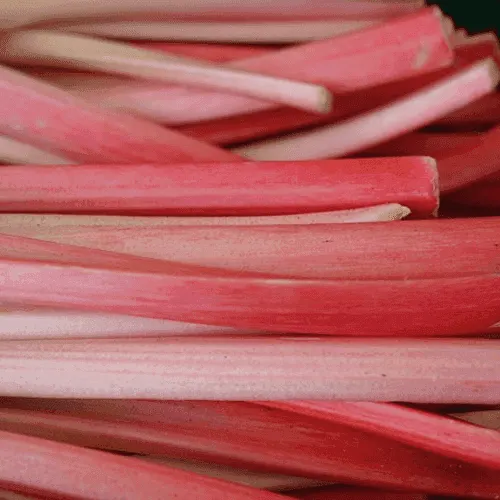
Other names rhubarbs
Rhubarb: high in oxalates; moderate in histamine. If you're sensitive to any of these, check it against your profile before eating.
Intolerances
- OxalatesHigh
Rhubarb is the food this axis was written for. The stalks are among the highest oxalate foods measured, and the leaves carry enough to be genuinely poisonous - which is why they are never sold. Stewing in water and pouring some of it away removes part of the soluble fraction; eating it with cream or custard does more, because the calcium binds the oxalate in the gut before it can be absorbed.
Sources· 1
- Noonan S.C. & Savage G.P., Asia Pac J Clin Nutr 8 (1999) 64–74: mean oxalate intake 70–150 mg a day in English diets, tea the largest single contributor, and soaking or cooking reduces oxalate by leaching
- Histamine (+liberators / DAO inhibitors)Moderate
Rhubarb is on the list as a histamine liberator, not as a source — it holds very little itself. The Swiss list rates “rhubarb” 1 of 3 and marks no letter, where it marks L on every entry it holds to be a liberator — but it hedges its own entry, “Controversial. A rating that calls itself controversial is a thin thing to eat on.
Sources· 1
- SIGHI — Swiss Interest Group Histamine Intolerance, food-compatibility list (2024-08-29), for the entry, its rating and the absence of a liberator letter
- TyramineNone
- SalicylateNone
- SucroseNone
- FODMAPsNone
- LactoseFODMAPsNone
- OligosaccharidesFODMAPsNone
- SorbitolFODMAPsNone
- FructoseFODMAPsNone
- NickelNone
- GlutenNone
Intolerance levels are based on our documented scientific sources. See sources →
Note about this food
It's possible to reduce the oxalates by boiling and discarding the cooking water
React to Oxalates? Check these too







More in Fruits
 Acorn squash
 Apple
Apple Apricot
 Apricot canned
 Aubergine
 Avocado
 Banana
 Bell pepper
 Blackberry
 Blackcurrant
 Blood orange
 Blueberry
Frequently asked questions
Which intolerances does rhubarb affect?
Rhubarb is notable for oxalates and histamine. Clear on tyramine, salicylate, sucrose, FODMAPs, lactose, oligosaccharides, sorbitol, fructose, nickel and gluten.
Does rhubarb contain oxalates?
Yes — rhubarb is high in oxalates. Rhubarb is the food this axis was written for. The stalks are among the highest oxalate foods measured, and the leaves carry enough to be genuinely poisonous - which is why they are never sold. Stewing in water and pouring some of it away removes part of the soluble fraction; eating it with cream or custard does more, because the calcium binds the oxalate in the gut before it can be absorbed.
Does rhubarb contain histamine?
Rhubarb contains moderate levels of histamine. Rhubarb is on the list as a histamine liberator, not as a source — it holds very little itself. The Swiss list rates “rhubarb” 1 of 3 and marks no letter, where it marks L on every entry it holds to be a liberator — but it hedges its own entry, “Controversial. A rating that calls itself controversial is a thin thing to eat on. Amounts vary by brand and recipe, so always check the label of the exact product.
Check any product in seconds
Scan a barcode with the Yllo app and see straight away whether a product fits your intolerances.