Quinoa
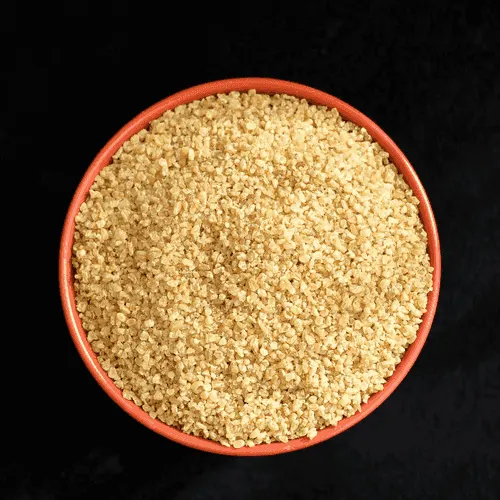
Quinoa: high in oxalates; low in histamine, FODMAPs, oligosaccharides and nickel. If you're sensitive to any of these, check it against your profile before eating.
Intolerances
- OxalatesHigh
Quinoa is high in oxalate, and the rinsing everyone does before cooking it - to remove the bitter saponins - takes some of the soluble fraction with it. Cooking in plenty of water and draining takes more; cooking it absorbed, pilaf-style, takes none.
Sources· 2
- Chai W & Liebman M, J Agric Food Chem 53 (2005), 3027-3030, which measured 30-87 % loss of soluble oxalate on boiling against 5-53 % on steaming
- Noonan SC & Savage GP, Asia Pac J Clin Nutr 8 (1999)
- Histamine (+liberators / DAO inhibitors)Low
Quinoa is a seed eaten cooked, with no fermentation step anywhere in it — and fermentation is what builds histamine. Rinsed, boiled and eaten the same day, it stays where it starts.
- FODMAPsLow
Quinoa is a seed rather than a cereal, and low. Worth saying plainly: it is NOT in the survey that gives this axis its grain figures - 55 products were measured and quinoa was not among them. Its level here rests on its being a seed with no fructan store, not on a number anyone has published for it.
Sources· 1
- Biesiekierski J. et al., J Hum Nutr Diet 24:2 (2011) 154-176, fructans and galacto-oligosaccharides per portion as eaten in 55 grain products across 55 grain products
- OligosaccharidesFODMAPsLow
Quinoa is not a grass and not a cereal - it is a seed from the same family as spinach and beetroot, and it does not store fructans the way grasses do. That is why it works as a wheat replacement on this axis and not only on the gluten one.
- NickelLow
Quinoa carries more than a refined grain and less than oats or buckwheat. The rinse it needs to remove saponins also washes away part of the seed coat, which is where the nickel concentrates.
Sources· 1
- Flyvholm M-A et al., Z Lebensm Unters Forsch 179 (1984) 427-431, nickel content of food and estimates of dietary intake
- TyramineNone
- SalicylateNone
- SucroseNone
- LactoseFODMAPsNone
- SorbitolFODMAPsNone
- FructoseFODMAPsNone
- GlutenNo
Intolerance levels are based on our documented scientific sources. See sources →
React to Oxalates? Check these too










More in Grains
 Amaranth
 Barley
 Basmati rice
 Brown rice
 Buckwheat
 Bulgur
 Corn
Corn Corn bran
 Cornmeal
 Couscous
 Durum wheat
- Jasmine rice
Frequently asked questions
Which intolerances does quinoa affect?
Quinoa is notable for oxalates, histamine, FODMAPs, oligosaccharides and nickel. Clear on tyramine, salicylate, sucrose, lactose, sorbitol, fructose and gluten.
Does quinoa contain oxalates?
Yes — quinoa is high in oxalates. Quinoa is high in oxalate, and the rinsing everyone does before cooking it - to remove the bitter saponins - takes some of the soluble fraction with it. Cooking in plenty of water and draining takes more; cooking it absorbed, pilaf-style, takes none.
Does quinoa contain histamine?
Quinoa contains only low levels of histamine. Quinoa is a seed eaten cooked, with no fermentation step anywhere in it — and fermentation is what builds histamine. Rinsed, boiled and eaten the same day, it stays where it starts.
Does quinoa contain FODMAPs?
Quinoa contains only low levels of FODMAPs. Quinoa is a seed rather than a cereal, and low. Worth saying plainly: it is NOT in the survey that gives this axis its grain figures - 55 products were measured and quinoa was not among them. Its level here rests on its being a seed with no fructan store, not on a number anyone has published for it.
Does quinoa contain oligosaccharides?
Quinoa contains only low levels of oligosaccharides. Quinoa is not a grass and not a cereal - it is a seed from the same family as spinach and beetroot, and it does not store fructans the way grasses do. That is why it works as a wheat replacement on this axis and not only on the gluten one. Amounts vary by brand and recipe, so always check the label of the exact product.
Check any product in seconds
Scan a barcode with the Yllo app and see straight away whether a product fits your intolerances.