Plum
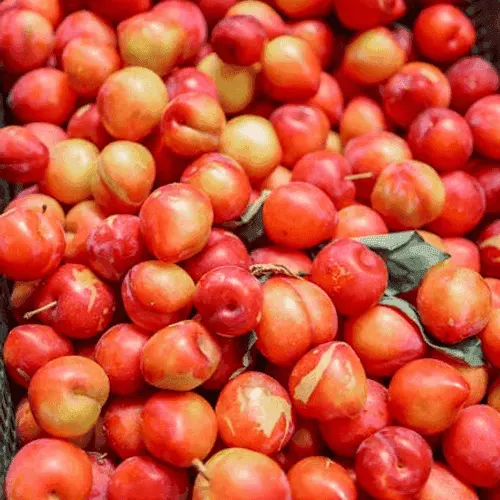
Plum: high in salicylate, FODMAPs and sorbitol; low in histamine. If you're sensitive to any of these, check it against your profile before eating.
Intolerances
- SalicylateHigh
Plums are high in salicylates, and dried into prunes they climb higher per gram as the water goes. Both the fresh fruit and the dried one belong in the same caution.
Sources· 1
- Scotter M.J. et al., Food Chemistry 105 (2007), free and acetyl salicylic acid in foods by GC-MS, and Venema D. et al., J Agric Food Chem 44 (1996), acetylsalicylic and salicylic acid in foods by HPLC
- FODMAPsHigh
Plum is the fruit whose sorbitol is famous enough to be a folk remedy - prunes are sold for exactly this effect. The fresh fruit carries a smaller dose of the same thing, and two plums is where most people find the edge.
Sources· 1
- Lenhart A. & Chey W.D., Adv Nutr 8 (2017) 587-596, systematic review of the effects of polyols
- SorbitolFODMAPsHigh
Plum has enough sorbitol to be a folk laxative, and that is not a metaphor - the polyol draws water into the bowel. A whole plum is well past a low-FODMAP serving.
Sources· 1
- Lenhart A. & Chey W.D., Adv Nutr 8 (2017) 587-596, a systematic review of 79 studies on the effects of polyols
- Histamine (+liberators / DAO inhibitors)Low
Plum is low fresh. Dried, as a prune, it concentrates whatever histamine was there - and any fruit left to dry slowly in warm air has given bacteria time as well as temperature.
Sources· 1
- SIGHI — Swiss Interest Group Histamine Intolerance, food-compatibility list, for the entry, its rating and its letters
- TyramineNone
- SucroseNone
- LactoseFODMAPsNone
- OligosaccharidesFODMAPsNone
- FructoseFODMAPsNone
- NickelNone
- OxalatesNone
- GlutenNone
Intolerance levels are based on our documented scientific sources. See sources →
React to Salicylate? Check these too


More in Fruits
 Acorn squash
 Apple
Apple Apricot
 Apricot canned
 Aubergine
 Avocado
 Banana
 Bell pepper
 Blackberry
 Blackcurrant
 Blood orange
 Blueberry
Frequently asked questions
Which intolerances does plum affect?
Plum is notable for salicylate, FODMAPs, sorbitol and histamine. Clear on tyramine, sucrose, lactose, oligosaccharides, fructose, nickel, oxalates and gluten.
Does plum contain salicylate?
Yes — plum is high in salicylate. Plums are high in salicylates, and dried into prunes they climb higher per gram as the water goes. Both the fresh fruit and the dried one belong in the same caution.
Does plum contain FODMAPs?
Yes — plum is high in FODMAPs. Plum is the fruit whose sorbitol is famous enough to be a folk remedy - prunes are sold for exactly this effect. The fresh fruit carries a smaller dose of the same thing, and two plums is where most people find the edge.
Does plum contain sorbitol?
Yes — plum is high in sorbitol. Plum has enough sorbitol to be a folk laxative, and that is not a metaphor - the polyol draws water into the bowel. A whole plum is well past a low-FODMAP serving.
Does plum contain histamine?
Plum contains only low levels of histamine. Plum is low fresh. Dried, as a prune, it concentrates whatever histamine was there - and any fruit left to dry slowly in warm air has given bacteria time as well as temperature. Amounts vary by brand and recipe, so always check the label of the exact product.
Check any product in seconds
Scan a barcode with the Yllo app and see straight away whether a product fits your intolerances.