Butternut squash
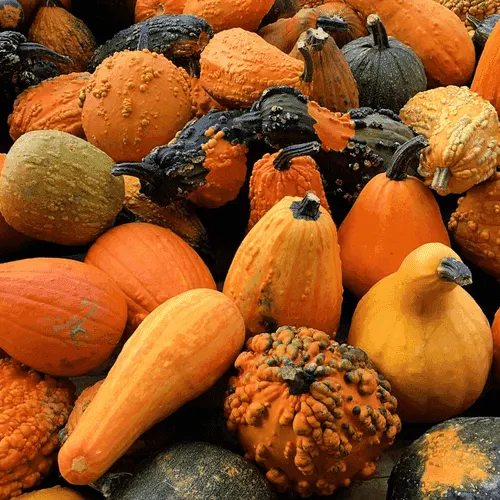
Other names butternut
Butternut squash: moderate in salicylate; low in FODMAPs and oligosaccharides. If you're sensitive to any of these, check it against your profile before eating.
Intolerances
- SalicylateModerate
Peeled butternut is markedly lower in salicylate than unpeeled, and it is nearly always peeled anyway — which is why the flesh alone is a reasonable choice at this level.
Sources· 1
- Scotter M.J. et al., Food Chemistry 105 (2007), free and acetyl salicylic acid in foods by GC-MS, and Venema D. et al., J Agric Food Chem 44 (1996), acetylsalicylic and salicylic acid in foods by HPLC
- FODMAPsLow
Butternut squash is low at a normal serving and stops being low above one - the threshold is around about a third of a cup. That is the shape of this whole axis: it publishes serving limits rather than verdicts, because the fructan or polyol load scales with how much you eat and there is no amount that is free.
Sources· 1
- Muir J et al., J Agric Food Chem 55 (2007) 6619-6627 and 57 (2009) 554-565, fructans and short-chain carbohydrates measured in Australian vegetables and fruit
- OligosaccharidesFODMAPsLow
Butternut squash carries a little fructan and rather more mannitol, and the FODMAP level follows the mannitol. A standard portion stays low here; it is the polyol, not the chains, that sets the serving limit.
- Histamine (+liberators / DAO inhibitors)None
A butternut keeps whole for months, then is cooked the day it is cut. A winter squash keeps for months, but it keeps intact and skin on, which is not the standing this axis counts — and it is a low-protein vegetable besides. Pickling or fermenting would make a different food of it.
Sources· 1
- Maintz & Novak, Am J Clin Nutr 2007
- TyramineNone
- SucroseNone
- LactoseFODMAPsNone
- SorbitolFODMAPsNone
- FructoseFODMAPsNone
- NickelNone
- OxalatesNone
- GlutenNone
Intolerance levels are based on our documented scientific sources. See sources →
React to Salicylate? Check these too








More in Fruits
 Acorn squash
 Apple
Apple Apricot
 Apricot canned
 Aubergine
 Avocado
 Banana
 Bell pepper
 Blackberry
 Blackcurrant
 Blood orange
 Blueberry
Frequently asked questions
Which intolerances does butternut squash affect?
Butternut squash is notable for salicylate, FODMAPs and oligosaccharides. Clear on histamine, tyramine, sucrose, lactose, sorbitol, fructose, nickel, oxalates and gluten.
Does butternut squash contain salicylate?
Butternut squash contains moderate levels of salicylate. Peeled butternut is markedly lower in salicylate than unpeeled, and it is nearly always peeled anyway — which is why the flesh alone is a reasonable choice at this level.
Does butternut squash contain FODMAPs?
Butternut squash contains only low levels of FODMAPs. Butternut squash is low at a normal serving and stops being low above one - the threshold is around about a third of a cup. That is the shape of this whole axis: it publishes serving limits rather than verdicts, because the fructan or polyol load scales with how much you eat and there is no amount that is free.
Does butternut squash contain oligosaccharides?
Butternut squash contains only low levels of oligosaccharides. Butternut squash carries a little fructan and rather more mannitol, and the FODMAP level follows the mannitol. A standard portion stays low here; it is the polyol, not the chains, that sets the serving limit. Amounts vary by brand and recipe, so always check the label of the exact product.
Check any product in seconds
Scan a barcode with the Yllo app and see straight away whether a product fits your intolerances.