Tomato
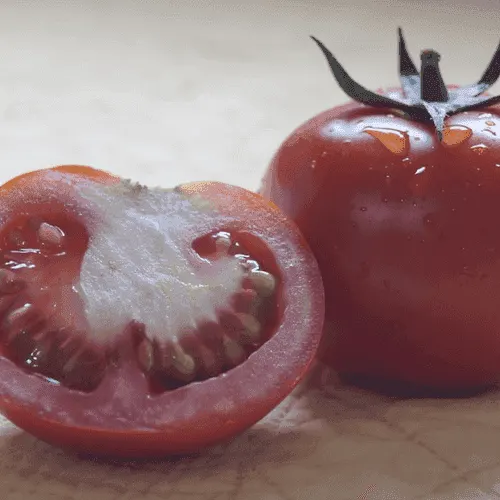
Other names tomatoes
Tomato: moderate in histamine; low in tyramine and salicylate. If you're sensitive to any of these, check it against your profile before eating.
Intolerances
- Histamine (+liberators / DAO inhibitors)Moderate
Tomato is both histamine-rich and a liberator, which is unusual - most foods are one or the other. Ripeness is the variable you control: a firm tomato measures below a soft one, and a tomato that has sat in the fruit bowl for a week is a different food from the one you brought home.
Sources· 2
- Maintz & Novak, Am J Clin Nutr 2007
- Comas-Baste et al., Biomolecules 2020
- TyramineLow
Tomato carries little tyramine. Ripening raises its sugars and softens it, but the amine needs bacteria working on protein over time, which a fresh tomato has never given them.
Sources· 1
- Sen N.P., Journal of Food Science 34 (1969) 22-26, per-food tyramine content
- SalicylateLow
Tomato carries salicylate, and its concentrated forms carry more: sauce and powder sit above the fresh fruit, and sun-dried tomato higher still. Nothing is added to a tomato to make it salicylate-bearing — those forms are concentrated tomato. Wood's systematic review puts tomato-based sauces at 12 per cent of all dietary salicylate in a Scottish population, the fourth largest contributor, and the axis article has named tomatoes among the high-salicylate foods all along. A fresh tomato is mostly water, and no figure is published for it. How it is cooked moves the phenolic content, and this vegetable is one of the four that were measured. Deep frying and sautéing RAISED total phenols; both kinds of boiling lowered them. Frying in extra virgin olive oil also transfers the oil's own phenols into the food - oleuropein, hydroxytyrosol, tyrosol, pinoresinol - so the dish is not simply the vegetable. All the methods preserved or raised antioxidant capacity. These are PHENOLS in general, though: the study measured eighteen of them and salicylic acid is not the subject.
Sources· 2
- Wood A et al., Mol Nutr Food Res 55 Suppl. 1 (2011) S7-S14, for the share of dietary salicylate that comes from tomato-based sauces
- Ramirez-Anaya J. del P. et al., Food Chem 188 (2015) 430-438, phenols and antioxidant capacity of Mediterranean vegetables cooked in extra virgin olive oil
- SucroseNone
- FODMAPsNone
- LactoseFODMAPsNone
- OligosaccharidesFODMAPsNone
- SorbitolFODMAPsNone
- FructoseFODMAPsNone
- NickelNone
- OxalatesNone
- GlutenNo
Intolerance levels are based on our documented scientific sources. See sources →
React to Histamine (+liberators / DAO inhibitors)? Check these too







More in Fruits
 Acorn squash
 Apple
Apple Apricot
 Apricot canned
 Aubergine
 Avocado
 Banana
 Bell pepper
 Blackberry
 Blackcurrant
 Blood orange
 Blueberry
Frequently asked questions
Which intolerances does tomato affect?
Tomato is notable for histamine, tyramine and salicylate. Clear on sucrose, FODMAPs, lactose, oligosaccharides, sorbitol, fructose, nickel, oxalates and gluten.
Does tomato contain histamine?
Tomato contains moderate levels of histamine. Tomato is both histamine-rich and a liberator, which is unusual - most foods are one or the other. Ripeness is the variable you control: a firm tomato measures below a soft one, and a tomato that has sat in the fruit bowl for a week is a different food from the one you brought home.
Does tomato contain tyramine?
Tomato contains only low levels of tyramine. Tomato carries little tyramine. Ripening raises its sugars and softens it, but the amine needs bacteria working on protein over time, which a fresh tomato has never given them.
Does tomato contain salicylate?
Tomato contains only low levels of salicylate. Tomato carries salicylate, and its concentrated forms carry more: sauce and powder sit above the fresh fruit, and sun-dried tomato higher still. Nothing is added to a tomato to make it salicylate-bearing — those forms are concentrated tomato. Wood's systematic review puts tomato-based sauces at 12 per cent of all dietary salicylate in a Scottish population, the fourth largest contributor, and the axis article has named tomatoes among the high-salicylate foods all along. A fresh tomato is mostly water, and no figure is published for it. How it is cooked moves the phenolic content, and this vegetable is one of the four that were measured. Deep frying and sautéing RAISED total phenols; both kinds of boiling lowered them. Frying in extra virgin olive oil also transfers the oil's own phenols into the food - oleuropein, hydroxytyrosol, tyrosol, pinoresinol - so the dish is not simply the vegetable. All the methods preserved or raised antioxidant capacity. These are PHENOLS in general, though: the study measured eighteen of them and salicylic acid is not the subject. Amounts vary by brand and recipe, so always check the label of the exact product.
Check any product in seconds
Scan a barcode with the Yllo app and see straight away whether a product fits your intolerances.