Kiwi
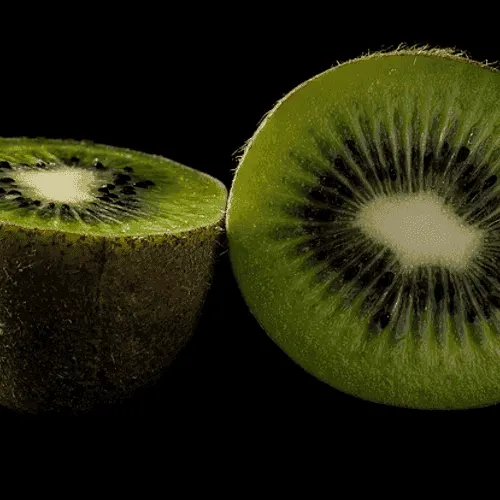
Other names kiwifruit, kiwi fruit
Kiwi: low in histamine, salicylate, FODMAPs and fructose. If you're sensitive to any of these, check it against your profile before eating.
Intolerances
- Histamine (+liberators / DAO inhibitors)Low
Kiwi contains almost no histamine but is classed as a liberator - it prompts the body to release its own. That is a different mechanism from content, and it is why a fresh fruit can still cause symptoms. It is one of the five fruits the current review names as reported to trigger the release of endogenous histamine, and the review says plainly that the mechanism responsible has not yet been elucidated.
Sources· 2
- Comas-Basté O. et al., Biomolecules 10:1181 (2020), for the five fruits reported to release endogenous histamine and for the mechanism being unelucidated
- SIGHI — Swiss Interest Group Histamine Intolerance, food-compatibility list, for the entry, its rating and its letters
- SalicylateLow
Kiwifruit measures 13.4 mg of salicylate per kilogram and a single fruit delivers 1.14 mg - one of the larger per-serve figures in the survey, because unlike a spice it is eaten by the fruit rather than by the pinch. Eaten with the skin on, as some people do, expect more: the same paper found unpeeled apple at three times the peeled value.
Sources· 1
- Malakar S, Gibson PR, Barrett JS & Muir JG, J Food Compos Anal 57 (2017), 31-39 - salicylic acid measured by GC-MS in 112 common foods, reported per serve as well as per kilogram
- FODMAPsLow
Kiwi is low on this axis rather than clear of it, and one family out of the several it counts is the reason: sugar. A measurement of the kiwi's sugars put sucrose at 71.9 per cent of the total, leaving glucose and fructose to share the rest, and free fructose is one of the FODMAPs. The polyol side is the other way round — the same survey measured sorbitol across 25 berry species and the kiwi, and found it in three of them, chokeberry, rowanberry and eastern shadbush, with the kiwi not among them.
Sources· 1
- Mikulic-Petkovsek M. et al., Journal of Food Science 77 (2012) C1064–C1070 — sugars, organic acids and phenolics in 25 berry species and the kiwi, and which of them carry sorbitol at all. It measures sugars, acids and phenols, so it settles nothing about fructans or galacto-oligosaccharides, and it gives no figure per 100 g for any species
- FructoseFODMAPsLow
Kiwi carries free fructose, though less of it than its sweetness suggests: a measurement of the kiwi's sugars put sucrose at 71.9 per cent of the total, which leaves glucose and fructose to share roughly the remaining quarter between them. Sucrose is itself a glucose joined to a fructose and is split into the two during digestion, so what a kiwi finally delivers is more than its free fructose alone. A ripe kiwi is sweeter than a firm one for the same reason any fruit is, so the state it is eaten in moves the figure.
Sources· 1
- Mikulic-Petkovsek M. et al., Journal of Food Science 77 (2012) C1064–C1070 — the share of sucrose in the kiwi's total sugars, with no milligram figure per 100 g for fructose or for any other sugar
- TyramineNone
- SucroseNone
- LactoseFODMAPsNone
- OligosaccharidesFODMAPsNone
- SorbitolFODMAPsNone
Kiwi carries no sorbitol. A survey of 25 berry species measured which of them contain it at all and found it in three — chokeberry, rowanberry and eastern shadbush — and the kiwi it measured alongside them was not one. Its sugars are mostly sucrose, which is a different axis from this one.
Sources· 1
- Mikulic-Petkovsek M. et al., Journal of Food Science 77 (2012) C1064–C1070 — which species carry sorbitol and which lead on each sugar, without a per-species figure for any of them
- NickelNone
- OxalatesNone
- GlutenNone
Intolerance levels are based on our documented scientific sources. See sources →
React to Histamine (+liberators / DAO inhibitors)? Check these too







More in Fruits
 Acorn squash
 Apple
Apple Apricot
 Apricot canned
 Aubergine
 Avocado
 Banana
 Bell pepper
 Blackberry
 Blackcurrant
 Blood orange
 Blueberry
Frequently asked questions
Which intolerances does kiwi affect?
Kiwi is notable for histamine, salicylate, FODMAPs and fructose. Clear on tyramine, sucrose, lactose, oligosaccharides, sorbitol, nickel, oxalates and gluten.
Does kiwi contain histamine?
Kiwi contains only low levels of histamine. Kiwi contains almost no histamine but is classed as a liberator - it prompts the body to release its own. That is a different mechanism from content, and it is why a fresh fruit can still cause symptoms. It is one of the five fruits the current review names as reported to trigger the release of endogenous histamine, and the review says plainly that the mechanism responsible has not yet been elucidated.
Does kiwi contain salicylate?
Kiwi contains only low levels of salicylate. Kiwifruit measures 13.4 mg of salicylate per kilogram and a single fruit delivers 1.14 mg - one of the larger per-serve figures in the survey, because unlike a spice it is eaten by the fruit rather than by the pinch. Eaten with the skin on, as some people do, expect more: the same paper found unpeeled apple at three times the peeled value.
Does kiwi contain FODMAPs?
Kiwi contains only low levels of FODMAPs. Kiwi is low on this axis rather than clear of it, and one family out of the several it counts is the reason: sugar. A measurement of the kiwi's sugars put sucrose at 71.9 per cent of the total, leaving glucose and fructose to share the rest, and free fructose is one of the FODMAPs. The polyol side is the other way round — the same survey measured sorbitol across 25 berry species and the kiwi, and found it in three of them, chokeberry, rowanberry and eastern shadbush, with the kiwi not among them.
Does kiwi contain fructose?
Kiwi contains only low levels of fructose. Kiwi carries free fructose, though less of it than its sweetness suggests: a measurement of the kiwi's sugars put sucrose at 71.9 per cent of the total, which leaves glucose and fructose to share roughly the remaining quarter between them. Sucrose is itself a glucose joined to a fructose and is split into the two during digestion, so what a kiwi finally delivers is more than its free fructose alone. A ripe kiwi is sweeter than a firm one for the same reason any fruit is, so the state it is eaten in moves the figure. Amounts vary by brand and recipe, so always check the label of the exact product.
Check any product in seconds
Scan a barcode with the Yllo app and see straight away whether a product fits your intolerances.