Cherry tomato
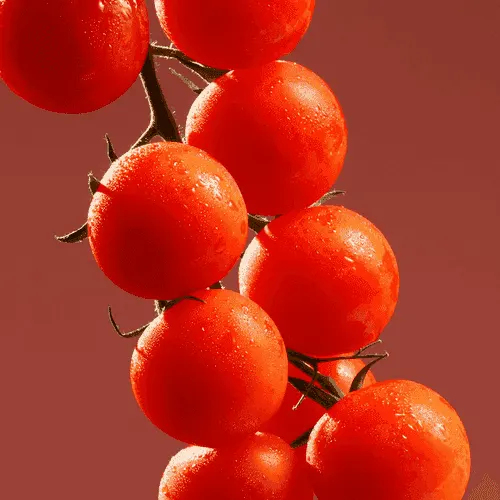
Other names cherry tomatoes
Cherry tomato: moderate in histamine and FODMAPs; low in tyramine and salicylate. If you're sensitive to any of these, check it against your profile before eating.
Intolerances
- Histamine (+liberators / DAO inhibitors)Moderate
Cherry tomatoes are sold ripe and eaten whole, skin, seeds and gel included - and the gel around the seeds is the part with the most histamine. A large tomato is usually seeded or sliced; a cherry tomato never is.
Sources· 2
- Maintz & Novak, Am J Clin Nutr 2007
- Comas-Baste et al., Biomolecules 2020
- FODMAPsModerate
Cherry tomatoes concentrate more sugar than a large tomato for the same weight - smaller fruit, more skin and seeds, riper at picking. A handful is around the FODMAP threshold where a sliced beef tomato is not.
Sources· 1
- Muir J et al., J Agric Food Chem 55 (2007) 6619-6627 and 57 (2009) 554-565, fructans and short-chain carbohydrates measured in Australian vegetables and fruit
- TyramineLow
Cherry tomatoes carry little tyramine. They are sold ripe and eaten fresh, with no curing step; ripening softens a fruit, but it is bacteria, given time and moisture, that build the amine.
Sources· 1
- Sen N.P., Journal of Food Science 34 (1969) 22-26, per-food tyramine content
- SalicylateLow
A cherry tomato is a tomato and carries what a tomato carries. If anything the skin-to-flesh ratio is higher, which matters because the skin usually carries more salicylate, but no figure is published for the difference.
Sources· 1
- Wood A et al., Mol Nutr Food Res 55 Suppl. 1 (2011) S7-S14, for the share of dietary salicylate that comes from tomato-based sauces
- SucroseNone
- LactoseFODMAPsNone
- OligosaccharidesFODMAPsNone
- SorbitolFODMAPsNone
- FructoseFODMAPsNone
- NickelNone
- OxalatesNone
- GlutenNone
Intolerance levels are based on our documented scientific sources. See sources →
React to Histamine (+liberators / DAO inhibitors)? Check these too







More in Fruits
 Acorn squash
 Apple
Apple Apricot
 Apricot canned
 Aubergine
 Avocado
 Banana
 Bell pepper
 Blackberry
 Blackcurrant
 Blood orange
 Blueberry
Frequently asked questions
Which intolerances does cherry tomato affect?
Cherry tomato is notable for histamine, FODMAPs, tyramine and salicylate. Clear on sucrose, lactose, oligosaccharides, sorbitol, fructose, nickel, oxalates and gluten.
Does cherry tomato contain histamine?
Cherry tomato contains moderate levels of histamine. Cherry tomatoes are sold ripe and eaten whole, skin, seeds and gel included - and the gel around the seeds is the part with the most histamine. A large tomato is usually seeded or sliced; a cherry tomato never is.
Does cherry tomato contain FODMAPs?
Cherry tomato contains moderate levels of FODMAPs. Cherry tomatoes concentrate more sugar than a large tomato for the same weight - smaller fruit, more skin and seeds, riper at picking. A handful is around the FODMAP threshold where a sliced beef tomato is not.
Does cherry tomato contain tyramine?
Cherry tomato contains only low levels of tyramine. Cherry tomatoes carry little tyramine. They are sold ripe and eaten fresh, with no curing step; ripening softens a fruit, but it is bacteria, given time and moisture, that build the amine.
Does cherry tomato contain salicylate?
Cherry tomato contains only low levels of salicylate. A cherry tomato is a tomato and carries what a tomato carries. If anything the skin-to-flesh ratio is higher, which matters because the skin usually carries more salicylate, but no figure is published for the difference. Amounts vary by brand and recipe, so always check the label of the exact product.
Check any product in seconds
Scan a barcode with the Yllo app and see straight away whether a product fits your intolerances.