Cantaloupe
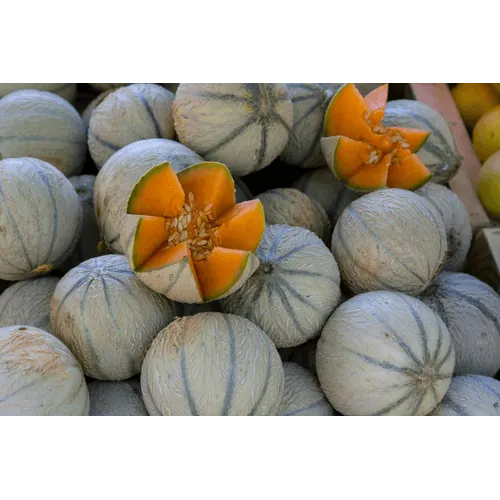
Other names cantaloupe melon
Cantaloupe: moderate in histamine and salicylate; low in sucrose, FODMAPs, oligosaccharides and fructose. If you're sensitive to any of these, check it against your profile before eating.
Intolerances
- Histamine (+liberators / DAO inhibitors)Moderate
Cantaloupe is a mild liberator, and the variable is not the fruit but the clock: cut melon accumulates amines fast, and cantaloupe is the melon most often bought pre-cut in a tub. Whole and cut at home is a different food from a tub that has been open two days. The Swiss list this axis leans on puts melons other than watermelon at 0 of 3 — compatible, no symptoms expected at usual intake — with a question mark for thin evidence and the note “suspected occasional histamine liberator effects”. The grouping here rests on a suspicion its own source rates as mild.
Sources· 3
- Maintz & Novak, Am J Clin Nutr 2007
- Zuberbier et al., EAACI/GA2LEN urticaria guideline
- SIGHI — Swiss Interest Group Histamine Intolerance, food-compatibility list (2024-08-29), for the entry, its rating and its letters
- SalicylateModerate
Melon flesh is mostly water, so the concentration per gram stays modest — the serving size is what brings it up. Choosing fully ripe fruit helps: salicylates are more concentrated in underripe produce.
Sources· 1
- Scotter M.J. et al., Food Chemistry 105 (2007), free and acetyl salicylic acid in foods by GC-MS, and Venema D. et al., J Agric Food Chem 44 (1996), acetylsalicylic and salicylic acid in foods by HPLC
- SucroseLow
Cantaloupe carries its sugar mostly as free glucose and fructose rather than as sucrose, so there is little for sucrase to split. Sweetness and sucrose content are not the same measurement, and this fruit is the proof.
- FODMAPsLow
Cantaloupe is low at a slice and climbs steeply with the bowl. Melons are eaten in volume because they are mostly water, which is exactly the habit that turns a low-FODMAP fruit into a high-FODMAP serving. Watermelon is the cautionary example: same family, and high.
Sources· 1
- Muir J et al., J Agric Food Chem 55 (2007) 6619-6627 and 57 (2009) 554-565, fructans and short-chain carbohydrates measured in Australian vegetables and fruit
- OligosaccharidesFODMAPsLow
Cantaloupe is the netted, orange-fleshed melon, sold in Australia as rockmelon. Muir found fructans in melon at between 0.21 and 0.46 g per 100 g across four fruits, without saying which melon was analysed. Melon is eaten by the bowl rather than the wedge, and that is what decides the amount.
Sources· 1
- Muir J. et al., J Agric Food Chem 55 (2007) 6619-6627, total fructans in 60 vegetables and 43 fruits
- FructoseFODMAPsLow
Cantaloupe is low on this axis because of sucrose first, then glucose and fructose in balance. Fructose only causes trouble when it outruns glucose - glucose is what carries it across the gut wall, so a balanced fruit is absorbed even when it tastes sweet.
- TyramineNone
- LactoseFODMAPsNone
- SorbitolFODMAPsNone
- OxalatesNone
- GlutenNone
- NickelNone
Intolerance levels are based on our documented scientific sources. See sources →
React to Histamine (+liberators / DAO inhibitors)? Check these too







More in Fruits
 Acorn squash
 Apple
Apple Apricot
 Apricot canned
 Aubergine
 Avocado
 Banana
 Bell pepper
 Blackberry
 Blackcurrant
 Blood orange
 Blueberry
Frequently asked questions
Which intolerances does cantaloupe affect?
Cantaloupe is notable for histamine, salicylate, sucrose, FODMAPs, oligosaccharides and fructose. Clear on tyramine, lactose, sorbitol, oxalates, gluten and nickel.
Does cantaloupe contain histamine?
Cantaloupe contains moderate levels of histamine. Cantaloupe is a mild liberator, and the variable is not the fruit but the clock: cut melon accumulates amines fast, and cantaloupe is the melon most often bought pre-cut in a tub. Whole and cut at home is a different food from a tub that has been open two days. The Swiss list this axis leans on puts melons other than watermelon at 0 of 3 — compatible, no symptoms expected at usual intake — with a question mark for thin evidence and the note “suspected occasional histamine liberator effects”. The grouping here rests on a suspicion its own source rates as mild.
Does cantaloupe contain salicylate?
Cantaloupe contains moderate levels of salicylate. Melon flesh is mostly water, so the concentration per gram stays modest — the serving size is what brings it up. Choosing fully ripe fruit helps: salicylates are more concentrated in underripe produce.
Does cantaloupe contain sucrose?
Cantaloupe contains only low levels of sucrose. Cantaloupe carries its sugar mostly as free glucose and fructose rather than as sucrose, so there is little for sucrase to split. Sweetness and sucrose content are not the same measurement, and this fruit is the proof.
Does cantaloupe contain FODMAPs?
Cantaloupe contains only low levels of FODMAPs. Cantaloupe is low at a slice and climbs steeply with the bowl. Melons are eaten in volume because they are mostly water, which is exactly the habit that turns a low-FODMAP fruit into a high-FODMAP serving. Watermelon is the cautionary example: same family, and high. Amounts vary by brand and recipe, so always check the label of the exact product.
Check any product in seconds
Scan a barcode with the Yllo app and see straight away whether a product fits your intolerances.