White beans
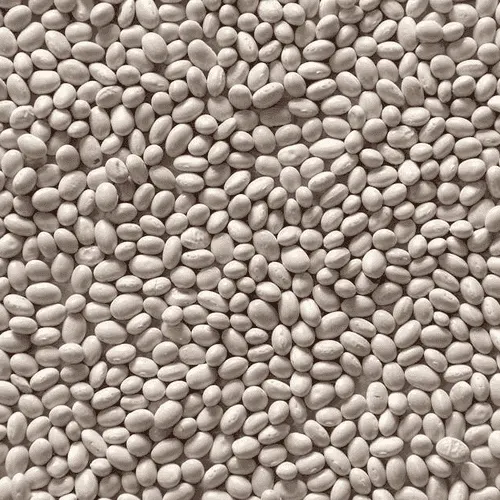
Other names navy beans, haricot beans
White beans: high in nickel; low in histamine, FODMAPs and oligosaccharides. If you're sensitive to any of these, check it against your profile before eating.
Intolerances
- NickelHigh
White beans carry the legume nickel load without the pigment of the coloured varieties, which changes nothing here: the colour is in the skin, the nickel is in the seed.
Sources· 1
- Flyvholm M-A et al., Z Lebensm Unters Forsch 179 (1984) 427-431, nickel content of food and estimates of dietary intake
- Histamine (+liberators / DAO inhibitors)Low
White beans carry little histamine dry, and boiling lowers it further - amines leach into the cooking water and are poured away. Sprouting does the opposite: a germinating seed produces amines as it wakes up, so sprouts are a different food here from the pulse they came from.
- FODMAPsLow
White beans are low at a small portion, canned and rinsed, and canning is what makes that possible for a pulse: the galacto-oligosaccharides are water-soluble, so they leach into the brine and go down the sink when you rinse. Dried and boiled at home, the same pulse measures higher unless you throw the cooking water away too.
- OligosaccharidesFODMAPsLow
White beans carry the same GOS as every other pulse; what puts them at this level is the canned and rinsed serving the figure is measured on. Cooked from dried and served in their liquid, they answer like the beans they are. Pulse oligosaccharides are water-soluble, and that is the practical point: the level here follows work on pulses AND on what cooking does to them, because soaking and boiling move part of them into water that is usually thrown away.
Sources· 1
- Reddy N. et al., Food Chemistry 13 (1984) 25-68, and Wang N. et al., Food Res Int 43 (2010) 589-594, oligosaccharides of pulses and the effect of cooking
- TyramineNone
- SalicylateNone
- SucroseNone
- LactoseFODMAPsNone
- SorbitolFODMAPsNone
- FructoseFODMAPsNone
- OxalatesNone
- GlutenNo
Intolerance levels are based on our documented scientific sources. See sources →
React to Nickel? Check these too






More in Nuts/Seeds
 Adzuki bean
 Almond
 Anise
Anise Beans
Beans Brazil nut
 Broad bean
 Cashew nuts
 Channa dal
 Chia seed
 Chickpea
 Flax seed
 Ground hazelnuts
Frequently asked questions
Which intolerances does white beans affect?
White beans is notable for nickel, histamine, FODMAPs and oligosaccharides. Clear on tyramine, salicylate, sucrose, lactose, sorbitol, fructose, oxalates and gluten.
Does white beans contain nickel?
Yes — white beans is high in nickel. White beans carry the legume nickel load without the pigment of the coloured varieties, which changes nothing here: the colour is in the skin, the nickel is in the seed.
Does white beans contain histamine?
White beans contains only low levels of histamine. White beans carry little histamine dry, and boiling lowers it further - amines leach into the cooking water and are poured away. Sprouting does the opposite: a germinating seed produces amines as it wakes up, so sprouts are a different food here from the pulse they came from.
Does white beans contain FODMAPs?
White beans contains only low levels of FODMAPs. White beans are low at a small portion, canned and rinsed, and canning is what makes that possible for a pulse: the galacto-oligosaccharides are water-soluble, so they leach into the brine and go down the sink when you rinse. Dried and boiled at home, the same pulse measures higher unless you throw the cooking water away too.
Does white beans contain oligosaccharides?
White beans contains only low levels of oligosaccharides. White beans carry the same GOS as every other pulse; what puts them at this level is the canned and rinsed serving the figure is measured on. Cooked from dried and served in their liquid, they answer like the beans they are. Pulse oligosaccharides are water-soluble, and that is the practical point: the level here follows work on pulses AND on what cooking does to them, because soaking and boiling move part of them into water that is usually thrown away. Amounts vary by brand and recipe, so always check the label of the exact product.
Check any product in seconds
Scan a barcode with the Yllo app and see straight away whether a product fits your intolerances.