Oat
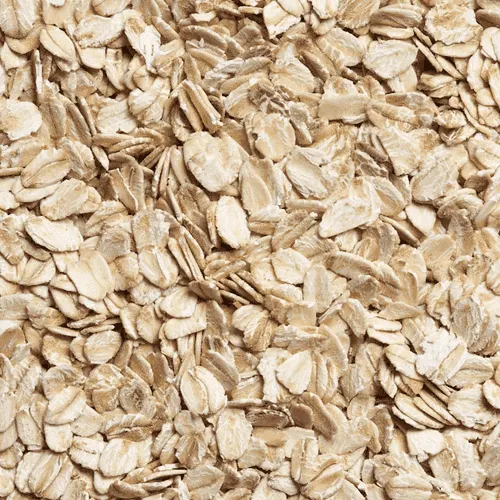
Oat: high in nickel; low in FODMAPs, oligosaccharides, oxalates and gluten. If you're sensitive to any of these, check it against your profile before eating.
Intolerances
- NickelHigh
Oats are high in nickel, and it sits in the bran - which is the part oats are eaten for. There is no low-nickel way to eat a whole oat.
Sources· 1
- Flyvholm M-A et al., Z Lebensm Unters Forsch 179 (1984) 427-431, nickel content of food and estimates of dietary intake
- FODMAPsLow
Oats carry fructans, which is easy to miss because the grain itself is so often treated as the safe one. Biesiekierski measured 0.11 g of fructan per portion as eaten — small, and not zero.
Sources· 1
- Biesiekierski J.R. et al., J Hum Nutr Diet 24 (2011) 154–176, fructans and short-chain carbohydrates in 55 grains, breads and pulses, reported in grams per portion as eaten
- OligosaccharidesFODMAPsLow
Oat fructan is the oligosaccharide this axis asks about, so its answer agrees with the FODMAP one: 0.11 g per portion as eaten, less than wheat and more than rice.
Sources· 1
- Biesiekierski J.R. et al., J Hum Nutr Diet 24 (2011) 154–176, fructans and short-chain carbohydrates in 55 grains, breads and pulses, reported in grams per portion as eaten
- OxalatesLow
Oats are not free of oxalate: Israr measured the highest soluble oxalate of the study in oat bran, 79 mg/100 g. The bran is the fraction and not the whole grain, so a bowl of oats carries less than that figure — but not zero. The oat is also high in phytate, which binds calcium and so keeps more of the oxalate soluble than the total alone suggests.
Sources· 1
- Israr B et al., Food Chemistry 141 (2013), 1690-1693, phytate, minerals and oxalate in bran cereals and legumes
- GlutenPossible
Oats sit in two frames at once, and both are true. Biochemically they carry AVENIN, a prolamin related to but different from the gluten of wheat, and most people with coeliac disease tolerate it. Legally they are gluten: Annex II lists 'wheat, rye, barley, OATS, spelt, kamut' among the cereals containing gluten, and the gluten-free regulation defines gluten as a protein fraction from those same four grains. That is why an oat can only be called gluten-free when it has been specially produced and tested below 20 mg/kg. They are flagged because they are grown in rotation with wheat and milled on the same equipment, so ordinary oats routinely test above the threshold. Certified gluten-free oats are grown and milled apart and do not. Certification answers contamination and not everything else: both associations say uncontaminated oats suit MOST coeliacs rather than all, because a minority react to the avenin itself.
Sources· 5
- AFDIAG (France) — les trois céréales interdites (blé, orge, seigle et leurs hybrides) et l'avoine non contaminée « consommable par presque tous les cœliaques »
- Coeliac UK — “Oats can be eaten by most people with coeliac disease but only if they're marked as ‘gluten free’”
- Commission Implementing Regulation (EU) No 828/2014, which sets the conditions for oats in gluten-free food
- Regulation (EU) No 1169/2011, Annex II, the substances requiring declaration and their named exemptions
- Commission Implementing Regulation (EU) No 828/2014, Article 2 and the Annex — the definition of gluten and the two thresholds
- Histamine (+liberators / DAO inhibitors)None
- TyramineNone
- SalicylateNone
- SucroseNone
- LactoseFODMAPsNone
- SorbitolFODMAPsNone
- FructoseFODMAPsNone
Intolerance levels are based on our documented scientific sources. See sources →
React to Nickel? Check these too







More in Grains
 Amaranth
 Barley
 Basmati rice
 Brown rice
 Buckwheat
 Bulgur
 Corn
Corn Corn bran
 Cornmeal
 Couscous
 Durum wheat
- Jasmine rice
Frequently asked questions
Which intolerances does oat affect?
Oat is notable for nickel, FODMAPs, oligosaccharides, oxalates and gluten. Clear on histamine, tyramine, salicylate, sucrose, lactose, sorbitol and fructose.
Does oat contain nickel?
Yes — oat is high in nickel. Oats are high in nickel, and it sits in the bran - which is the part oats are eaten for. There is no low-nickel way to eat a whole oat.
Does oat contain FODMAPs?
Oat contains only low levels of FODMAPs. Oats carry fructans, which is easy to miss because the grain itself is so often treated as the safe one. Biesiekierski measured 0.11 g of fructan per portion as eaten — small, and not zero.
Does oat contain oligosaccharides?
Oat contains only low levels of oligosaccharides. Oat fructan is the oligosaccharide this axis asks about, so its answer agrees with the FODMAP one: 0.11 g per portion as eaten, less than wheat and more than rice.
Does oat contain oxalates?
Oat contains only low levels of oxalates. Oats are not free of oxalate: Israr measured the highest soluble oxalate of the study in oat bran, 79 mg/100 g. The bran is the fraction and not the whole grain, so a bowl of oats carries less than that figure — but not zero. The oat is also high in phytate, which binds calcium and so keeps more of the oxalate soluble than the total alone suggests. Amounts vary by brand and recipe, so always check the label of the exact product.
Check any product in seconds
Scan a barcode with the Yllo app and see straight away whether a product fits your intolerances.