Gluten-free bread
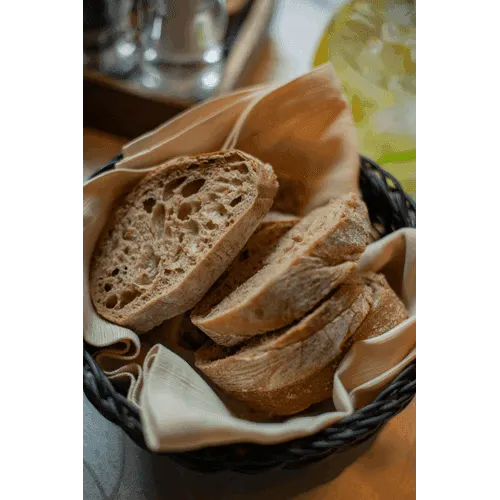
Other names Pain sans gluten
Gluten-free bread: low in FODMAPs, lactose, histamine, oligosaccharides, sucrose and nickel. If you're sensitive to any of these, check it against your profile before eating.
Intolerances
- FODMAPsLow
Gluten-free bread is low here, but not for the reason most people assume. Gluten-free bread was measured at about the same fructan content as wheat bread - 1.0 against 0.6 to 1.9 grams per hundred - so removing the gluten did not remove the FODMAP. Why the finished loaf still tests low on the whole axis is not something this measurement can say: it counted fructan and nothing else, per hundred grams rather than per serving. The starch explanation is often repeated and nothing published carries it. Gluten-free and low-FODMAP are two different claims. The brand is the variable that matters: the gluten-free loaves measured ranged from 0.36 to 1.79 grams per hundred, five times apart.
Sources· 3
- Whelan K et al., Int J Food Sci Nutr 62:5 (2011) 498-503, fructan measured in wheat, rye and gluten-free breads
- Tuck C et al., J Hum Nutr Diet 31 (2018), FODMAP content of common plant-based and processed foods
- USDA FoodData Central, the national nutrient database, queried for the sugar profile
- LactoseFODMAPsLow
Gluten-free bread uses milk powder or whey protein for the job gluten used to do - holding the crumb together and browning the crust. That makes dairy far commoner in gluten-free bakery than in ordinary bread, which is the opposite of what most people assume.
Sources· 3
- Regulation (EU) No 1169/2011, Annex II, which requires milk to be declared as an allergen
- USDA FoodData Central
- Schweizer Nährwertdatenbank v6.3 (2021), Bundesamt für Lebensmittelsicherheit, consulted as a third lactose reading
- Histamine (+liberators / DAO inhibitors)Low
Gluten-free bread is low because it is usually chemically raised or quickly proved, without a long ferment. Baking and drying are the two processes that end the amine question rather than starting it - heat kills the bacteria and dryness stops the rest. A sourdough proved for two days is the counter-example.
Sources· 1
- SIGHI — Swiss Interest Group Histamine Intolerance, food-compatibility list, for the entry, its rating and its letters
- OligosaccharidesFODMAPsLow
Gluten-free bread was measured at about 1 gram of fructan per hundred, and a fructan is an oligosaccharide. Whelan measured it at 1.00 g/100 g, against 0.61 to 1.94 for the breads tested, and called the resemblance to wheat bread surprising. What varies most is the brand and not the type: gluten-free loaves ranged from 0.36 to 1.79, a fivefold spread on one shelf. The authors describe these quantities as low.
Sources· 1
- Whelan K et al., Int J Food Sci Nutr 62:5 (2011) 498-503, fructan measured in wheat, rye and gluten-free breads
- SucroseLow
Gluten-free bread often carries more sugar than wheat bread, because sugar helps the substitute starches brown and hold moisture. It is one of the places where removing one thing adds another.
Sources· 1
- USDA FoodData Central, the national nutrient database, queried for the sugar profile
- NickelLow
Gluten-free bread is built from rice, maize and starches — cereals too — so removing the gluten does not remove the nickel, and the loaves pass through the same processing equipment the surveys point at. Two national surveys put bread and cereals among the groups that deliver most of the dietary nickel — near the top because they are eaten in quantity rather than because they are concentrated, and neither publishes a figure for a single grain.
Sources· 2
- Smart G.A. & Sherlock J.C., Food Addit Contam 4 (1987) 61-71, nickel in foods and the diet
- Flyvholm M-A et al., Z Lebensm Unters Forsch 179 (1984) 427-431
- GlutenNo
- FructoseFODMAPsNone
- SorbitolFODMAPsNone
- TyramineNone
- SalicylateNone
- OxalatesNone
Intolerance levels are based on our documented scientific sources. See sources →
React to FODMAPs? Check these too









More in Other
 Almond butter
 Almond cream
 Almond yogurt
 Apple puree
 Beef broth
 Beef gelatin
 Beetroot juice powder
 Bouillon cube
 Breadcrumbs
 Calcium
 Cashew cheese
 Chicken broth
Frequently asked questions
Which intolerances does Gluten-free bread affect?
Gluten-free bread is notable for FODMAPs, lactose, histamine, oligosaccharides, sucrose and nickel. Clear on gluten, fructose, sorbitol, tyramine, salicylate and oxalates.
Does Gluten-free bread contain FODMAPs?
Gluten-free bread contains only low levels of FODMAPs. Gluten-free bread is low here, but not for the reason most people assume. Gluten-free bread was measured at about the same fructan content as wheat bread - 1.0 against 0.6 to 1.9 grams per hundred - so removing the gluten did not remove the FODMAP. Why the finished loaf still tests low on the whole axis is not something this measurement can say: it counted fructan and nothing else, per hundred grams rather than per serving. The starch explanation is often repeated and nothing published carries it. Gluten-free and low-FODMAP are two different claims. The brand is the variable that matters: the gluten-free loaves measured ranged from 0.36 to 1.79 grams per hundred, five times apart.
Does Gluten-free bread contain lactose?
Gluten-free bread contains only low levels of lactose. Gluten-free bread uses milk powder or whey protein for the job gluten used to do - holding the crumb together and browning the crust. That makes dairy far commoner in gluten-free bakery than in ordinary bread, which is the opposite of what most people assume.
Does Gluten-free bread contain histamine?
Gluten-free bread contains only low levels of histamine. Gluten-free bread is low because it is usually chemically raised or quickly proved, without a long ferment. Baking and drying are the two processes that end the amine question rather than starting it - heat kills the bacteria and dryness stops the rest. A sourdough proved for two days is the counter-example.
Does Gluten-free bread contain oligosaccharides?
Gluten-free bread contains only low levels of oligosaccharides. Gluten-free bread was measured at about 1 gram of fructan per hundred, and a fructan is an oligosaccharide. Whelan measured it at 1.00 g/100 g, against 0.61 to 1.94 for the breads tested, and called the resemblance to wheat bread surprising. What varies most is the brand and not the type: gluten-free loaves ranged from 0.36 to 1.79, a fivefold spread on one shelf. The authors describe these quantities as low. Amounts vary by brand and recipe, so always check the label of the exact product.
Check any product in seconds
Scan a barcode with the Yllo app and see straight away whether a product fits your intolerances.