Salami
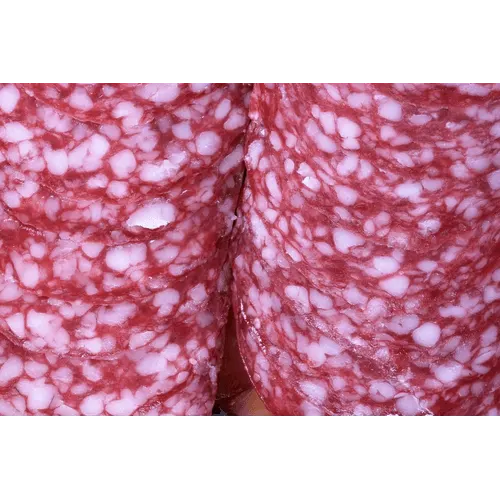
Other names Saucisson sec, Salame
Salami: high in histamine and tyramine; low in FODMAPs, lactose, gluten, oligosaccharides, salicylate and nickel. If you're sensitive to any of these, check it against your profile before eating.
Intolerances
- Histamine (+liberators / DAO inhibitors)High
Salami is the cured meat that is deliberately FERMENTED, and bacteria are given weeks to work before the drying even finishes. Industrial production adds a selected starter culture; a traditional salami ferments on whatever is already in the meat and the room, which makes it the less predictable of the two. Either way it is a different process from salting alone: fermentation is what produces the amines, and a dry-cured ham is salted without it. A survey of dry fermented sausages puts the risk at negligible for a healthy person and at a 34 per cent chance of passing the safe threshold for someone taking an MAOI. High microbial counts are what a fermented sausage IS, so amines accumulate — and great fluctuations are reported within a single type of product. Suzzi also records that no specific regulation covers these compounds in sausages, where fishery products have legal ceilings. An absence of limits is not a statement that the amounts are small.
Sources· 3
- Latorre-Moratalla et al., Food Chem Toxicol 2017
- Hernandez-Jover et al., J Agric Food Chem 1997
- Suzzi G et al., Int J Food Microbiol 2003
- TyramineHigh
Salami is fermented on purpose and then dried, which concentrates what the bacteria made - two operations pushing the same way, which is why salami measures above the dry-cured hams. How the fermentation is started matters less than you would hope: industrial production adds a selected starter culture, a traditional salami relies on the bacteria already in the meat and the room, and the traditional route is the less predictable of the two rather than the safer. Cooking will not reduce it: tyramine is heat-stable. Latorre-Moratalla put figures on who that matters to. Across 474 dry fermented sausages and Spanish eating habits, a meal delivers on average 6.2 mg of tyramine and 1.39 mg of histamine — negligible risk for a healthy person, but a 34 per cent chance of passing the 6 mg safe threshold for someone taking an MAOI, and an estimated 7,000 people per million with histamine intolerance who could react after eating them.
Sources· 3
- EFSA Panel on Biological Hazards, EFSA Journal 2011
- Suzzi G et al., Int J Food Microbiol 2003
- Latorre-Moratalla M et al., Food Chem Toxicol 2017
- FODMAPsLow
Salami is meat, fat and salt, and none of the three carries a fermentable carbohydrate. What decides a salami is the rest of its list: garlic is usual and it is declared, and industrial versions may carry milk powder or added dextrose.
Sources· 1
- Gibson P.R. & Shepherd S.J., J Gastroenterol Hepatol 25 (2010) 252-258, the framework this axis rests on
- LactoseFODMAPsLow
Salami is the one where lactose is added ON PURPOSE and not as a filler: it is the sugar the starter culture ferments, and without it the sausage would not acidify. Most of it is consumed during curing, which is why the level is low rather than absent.
Sources· 3
- Regulation (EU) No 1169/2011, Annex II, which requires milk to be declared as an allergen
- USDA FoodData Central
- Schweizer Nährwertdatenbank v6.3 (2021), Bundesamt für Lebensmittelsicherheit, consulted as a third lactose reading
- GlutenPossible
Salami's gluten risk is rusk - dried breadcrumb used as a binder and a moisture regulator in many industrial recipes. Traditional dry salami is meat, fat, salt and culture, with none. The two look identical hanging in a shop.
Sources· 2
- Regulation (EU) No 1169/2011, Annex II (cereals containing gluten must be declared)
- Commission Implementing Regulation (EU) No 828/2014 (gluten-free at or below 20 mg/kg)
- OligosaccharidesFODMAPsLow
Salami is meat, fat and salt, none of which carries an oligosaccharide - but garlic is a standard ingredient in most traditions, and it is in the mix rather than on the surface. The ingredient list is short and worth reading in full.
- SalicylateLow
Salami gets no salicylate from the meat; the pepper, garlic and paprika in the mix decide the level. A plainly seasoned salami is low, a spiced one is not.
- NickelLow
Salami is minced meat and fat fermented in a casing, with pepper and garlic. The spices carry a little more than the meat does, which is the only thing raising it at all. The nickel here follows a national survey covering four decades - the kind of series that shows whether a level is drifting, which a single study never can.
Sources· 1
- Jorhem L. et al., Livsmedelsverket rapport 28/2017, metals in Swedish foods over four decades
- FructoseFODMAPsNone
- SorbitolFODMAPsNone
- SucroseNone
- OxalatesNone
Intolerance levels are based on our documented scientific sources. See sources →
React to Histamine (+liberators / DAO inhibitors)? Check these too









More in Meat
 Bacon
Bacon Beef
Beef- Beef heart
- Beef liver
- Beef tongue
 Chicken
- Chicken heart
- Chicken liver
 Chorizo
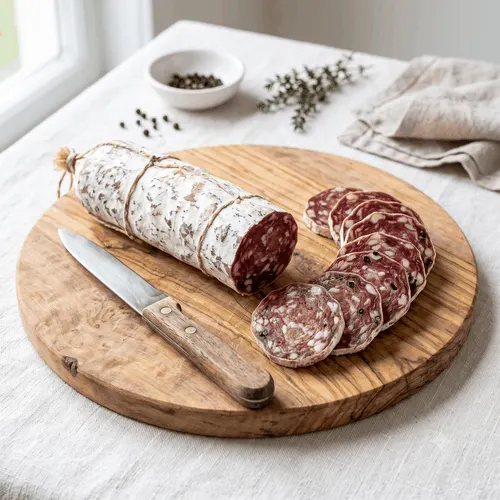 Cured sausage
 Duck
Duck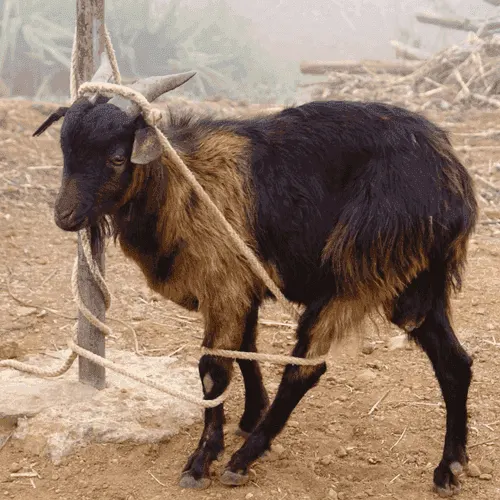 Goat
Goat
Frequently asked questions
Which intolerances does Salami affect?
Salami is notable for histamine, tyramine, FODMAPs, lactose, gluten, oligosaccharides, salicylate and nickel. Clear on fructose, sorbitol, sucrose and oxalates.
Does Salami contain histamine?
Yes — Salami is high in histamine. Salami is the cured meat that is deliberately FERMENTED, and bacteria are given weeks to work before the drying even finishes. Industrial production adds a selected starter culture; a traditional salami ferments on whatever is already in the meat and the room, which makes it the less predictable of the two. Either way it is a different process from salting alone: fermentation is what produces the amines, and a dry-cured ham is salted without it. A survey of dry fermented sausages puts the risk at negligible for a healthy person and at a 34 per cent chance of passing the safe threshold for someone taking an MAOI. High microbial counts are what a fermented sausage IS, so amines accumulate — and great fluctuations are reported within a single type of product. Suzzi also records that no specific regulation covers these compounds in sausages, where fishery products have legal ceilings. An absence of limits is not a statement that the amounts are small.
Does Salami contain tyramine?
Yes — Salami is high in tyramine. Salami is fermented on purpose and then dried, which concentrates what the bacteria made - two operations pushing the same way, which is why salami measures above the dry-cured hams. How the fermentation is started matters less than you would hope: industrial production adds a selected starter culture, a traditional salami relies on the bacteria already in the meat and the room, and the traditional route is the less predictable of the two rather than the safer. Cooking will not reduce it: tyramine is heat-stable. Latorre-Moratalla put figures on who that matters to. Across 474 dry fermented sausages and Spanish eating habits, a meal delivers on average 6.2 mg of tyramine and 1.39 mg of histamine — negligible risk for a healthy person, but a 34 per cent chance of passing the 6 mg safe threshold for someone taking an MAOI, and an estimated 7,000 people per million with histamine intolerance who could react after eating them.
Does Salami contain FODMAPs?
Salami contains only low levels of FODMAPs. Salami is meat, fat and salt, and none of the three carries a fermentable carbohydrate. What decides a salami is the rest of its list: garlic is usual and it is declared, and industrial versions may carry milk powder or added dextrose.
Does Salami contain lactose?
Salami contains only low levels of lactose. Salami is the one where lactose is added ON PURPOSE and not as a filler: it is the sugar the starter culture ferments, and without it the sausage would not acidify. Most of it is consumed during curing, which is why the level is low rather than absent. Amounts vary by brand and recipe, so always check the label of the exact product.
Check any product in seconds
Scan a barcode with the Yllo app and see straight away whether a product fits your intolerances.