White wine vinegar
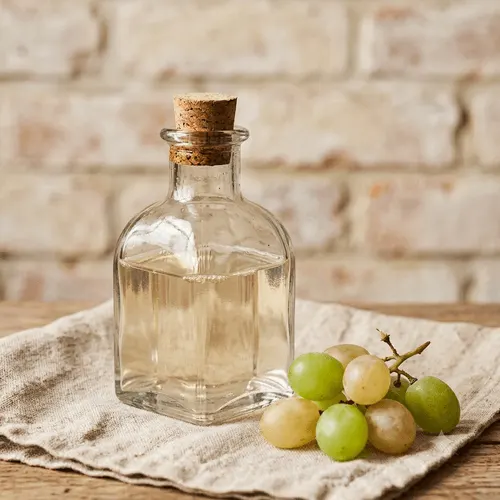
White wine vinegar: high in salicylate; low in histamine and tyramine. If you're sensitive to any of these, check it against your profile before eating.
Intolerances
- SalicylateHigh
Made from white wine, which has less skin contact than red — the milder of the wine vinegars, though no published salicylate measurement covers vinegar at all, so the category sits on the wine it was made from.
Sources· 1
- Malakar S., Gibson P.R., Barrett J.S. & Muir J.G., J Food Compos Anal 57 (2017) 31–39, salicylic acid by GC-MS in 112 foods, Table 2c for the spices
- Histamine (+liberators / DAO inhibitors)Low
White wine vinegar is doubly fermented like the rest, but it is not aged in wood - it goes from wine to vinegar to bottle - so it lands below the balsamic and sherry end. If you use vinegar at all, the young clear ones are the gentler choice, and this is the plainest of them. Ordóñez measured it among the five and put white wine vinegar with apple and plain Sherry at the LOWEST end for total biogenic amines.
Sources· 3
- Comas-Baste et al., Biomolecules 2020
- McCabe-Sellers et al., J Food Compos Anal 2006
- Ordóñez J.L. et al., Food Chem 141 (2013) 2713–2719, biogenic amines measured in balsamic, apple and wine vinegars
- TyramineLow
White wine vinegar is the same process on a white base, so two fermentations have run through it. Surveys of vinegars do find biogenic amines, but at levels a tablespoon of dressing does not carry far - the portion is what keeps this low, not the process.
- FODMAPsNone
Wine vinegar is a wine that was fermented a second time, so whatever sugar the wine still had went the way of the alcohol. It is the reason a vinegar can be built on a fruit that is difficult on this axis and be easy itself - and the reason balsamic is the exception, because balsamic is cooked grape must and the must was never fermented out.
Sources· 1
- Muir J et al., J Agric Food Chem 55 (2007) and 57 (2009)
- LactoseFODMAPsNone
- GlutenNo
- FructoseFODMAPsNone
White wine vinegar: two fermentations leave no fructose behind: the first turns it to alcohol, the second turns the alcohol to acid. What is on the label to watch instead is added sugar or caramel, which some cheaper wine vinegars carry for colour and roundness.
- OligosaccharidesFODMAPsNone
- SorbitolFODMAPsNone
- SucroseNone
- NickelNone
- OxalatesNone
Intolerance levels are based on our documented scientific sources. See sources →
React to Salicylate? Check these too


More in Spices
 Allspice
 Apple cider vinegar
 Balsamic vinegar
 Basil
Basil Bay leaf
 Black pepper
 Bourbon vanilla
 Capers
 Caraway
 Cardamom
 Cayenne pepper
 Chili powder
Frequently asked questions
Which intolerances does white wine vinegar affect?
White wine vinegar is notable for salicylate, histamine and tyramine. Clear on FODMAPs, lactose, gluten, fructose, oligosaccharides, sorbitol, sucrose, nickel and oxalates.
Does white wine vinegar contain salicylate?
Yes — white wine vinegar is high in salicylate. Made from white wine, which has less skin contact than red — the milder of the wine vinegars, though no published salicylate measurement covers vinegar at all, so the category sits on the wine it was made from.
Does white wine vinegar contain histamine?
White wine vinegar contains only low levels of histamine. White wine vinegar is doubly fermented like the rest, but it is not aged in wood - it goes from wine to vinegar to bottle - so it lands below the balsamic and sherry end. If you use vinegar at all, the young clear ones are the gentler choice, and this is the plainest of them. Ordóñez measured it among the five and put white wine vinegar with apple and plain Sherry at the LOWEST end for total biogenic amines.
Does white wine vinegar contain tyramine?
White wine vinegar contains only low levels of tyramine. White wine vinegar is the same process on a white base, so two fermentations have run through it. Surveys of vinegars do find biogenic amines, but at levels a tablespoon of dressing does not carry far - the portion is what keeps this low, not the process. Amounts vary by brand and recipe, so always check the label of the exact product.
Check any product in seconds
Scan a barcode with the Yllo app and see straight away whether a product fits your intolerances.