Balsamic vinegar
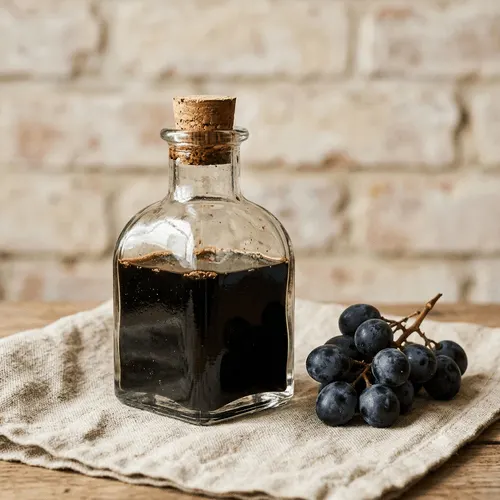
Other names aceto balsamico, balsamic
Balsamic vinegar: high in histamine; low in fructose, sucrose, tyramine, salicylate and nickel. If you're sensitive to any of these, check it against your profile before eating.
Intolerances
- Histamine (+liberators / DAO inhibitors)High
Balsamic is the most concentrated vinegar on this axis and the one that most rewards reading the label: traditional balsamic is cooked grape must aged in a series of wooden casks for twelve to twenty-five years. Two fermentations, decades of wood, and reduction on top - everything that builds amines, applied for longer than to any other vinegar. Ordóñez measured the amines directly and put balsamic, with Pedro Ximénez Sherry, at the top of the five vinegars surveyed — total biogenic amines across the set ran from 23 to 1,445 µg/L, and even the highest of those is below what wines carry.
Sources· 3
- Comas-Baste et al., Biomolecules 2020
- McCabe-Sellers et al., J Food Compos Anal 2006
- Ordóñez J.L. et al., Food Chem 141 (2013) 2713–2719, biogenic amines measured in balsamic, apple and wine vinegars
- FructoseFODMAPsLow
Balsamic vinegar is cooked grape must, so the grape's fructose is concentrated - then partly consumed by the long fermentation. It is poured in teaspoons.
Sources· 1
- USDA FoodData Central, queried for the sugar profile
- SucroseLow
Balsamic vinegar is cooked grape must, and grape sugar is free glucose and fructose rather than sucrose. The syrupy sweetness is real but it is not sucrose.
Sources· 1
- USDA FoodData Central, the national nutrient database, queried for the sugar profile
- TyramineLow
Balsamic vinegar is cooked must aged for years in wood, so two fermentations have run through it. Surveys of vinegars do find biogenic amines, but at levels a tablespoon of dressing does not carry far - the portion is what keeps this low, not the process.
- SalicylateLow
Balsamic vinegar is concentrated cooked grape must, aged for years. The salicylate concentration works against you here even though the rating is low — use it by the drizzle.
- NickelLow
Balsamic vinegar is grape must cooked down and aged for years in wooden casks. Wood contributes nothing metallic; the cooking is what concentrates the little the grape held. The nickel here follows a study of SPICES that analysed the powder directly instead of digesting it first.
Sources· 1
- Virgilio A. et al., J Braz Chem Soc 26:10 (2015) 1988-1993, Cd, Ni and V in spices by solid-sampling HR-CS GF-AAS
- FODMAPsNone
- LactoseFODMAPsNone
- GlutenNo
- OligosaccharidesFODMAPsNone
- SorbitolFODMAPsNone
- OxalatesNone
Intolerance levels are based on our documented scientific sources. See sources →
React to Histamine (+liberators / DAO inhibitors)? Check these too
More in Spices
 Allspice
 Apple cider vinegar
 Basil
Basil Bay leaf
 Black pepper
 Bourbon vanilla
 Capers
 Caraway
 Cardamom
 Cayenne pepper
 Chili powder
 Chives
Frequently asked questions
Which intolerances does balsamic vinegar affect?
Balsamic vinegar is notable for histamine, fructose, sucrose, tyramine, salicylate and nickel. Clear on FODMAPs, lactose, gluten, oligosaccharides, sorbitol and oxalates.
Does balsamic vinegar contain histamine?
Yes — balsamic vinegar is high in histamine. Balsamic is the most concentrated vinegar on this axis and the one that most rewards reading the label: traditional balsamic is cooked grape must aged in a series of wooden casks for twelve to twenty-five years. Two fermentations, decades of wood, and reduction on top - everything that builds amines, applied for longer than to any other vinegar. Ordóñez measured the amines directly and put balsamic, with Pedro Ximénez Sherry, at the top of the five vinegars surveyed — total biogenic amines across the set ran from 23 to 1,445 µg/L, and even the highest of those is below what wines carry.
Does balsamic vinegar contain fructose?
Balsamic vinegar contains only low levels of fructose. Balsamic vinegar is cooked grape must, so the grape's fructose is concentrated - then partly consumed by the long fermentation. It is poured in teaspoons.
Does balsamic vinegar contain sucrose?
Balsamic vinegar contains only low levels of sucrose. Balsamic vinegar is cooked grape must, and grape sugar is free glucose and fructose rather than sucrose. The syrupy sweetness is real but it is not sucrose.
Does balsamic vinegar contain tyramine?
Balsamic vinegar contains only low levels of tyramine. Balsamic vinegar is cooked must aged for years in wood, so two fermentations have run through it. Surveys of vinegars do find biogenic amines, but at levels a tablespoon of dressing does not carry far - the portion is what keeps this low, not the process. Amounts vary by brand and recipe, so always check the label of the exact product.
Check any product in seconds
Scan a barcode with the Yllo app and see straight away whether a product fits your intolerances.