Parmesan
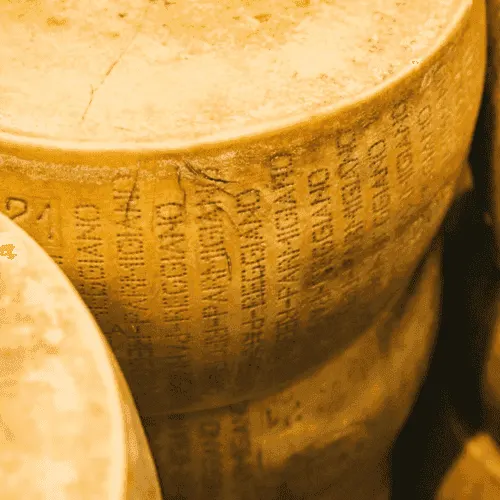
Other names parmigiano reggiano, Parmesan cheese
Parmesan: high in histamine and tyramine. If you're sensitive to any of these, check it against your profile before eating.
Intolerances
- Histamine (+liberators / DAO inhibitors)High
Parmigiano Reggiano is aged 12 months at the least and commonly 24 or 36, and histamine rises with ageing - EFSA ranked the fermented categories but could not put numbers on them, so read that as a direction rather than a rate, with a well-aged wheel as the reference point at the top of this axis. Its specification forbids additives and selected cultures, so nothing slows the bacteria down. A grating is a small portion, and that is the only thing in its favour.
Sources· 3
- Parmigiano Reggiano and Grana Padano DOP specifications, for the minimum ageing and the lysozyme provision
- McCabe-Sellers et al., J Food Compos Anal 2006, for the amines
- EFSA Panel on Biological Hazards, EFSA Journal 2011, for the doses — 50 mg histamine, 600 mg tyramine without MAOI treatment and 6 mg with a classical one
- TyramineHigh
Parmigiano Reggiano is aged 12 months at the least and commonly 24 or 36, and tyramine tracks ageing closely - which puts a well-aged wheel at the top of this axis with mature cheddar. The specification forbids additives, selected cultures and silage feed entirely, so nothing interrupts the bacteria: the ageing is the whole story. The white crystals in an old piece are tyrosine, the amino acid they turn into tyramine.
Sources· 2
- Parmigiano Reggiano and Grana Padano DOP specifications, for the minimum ageing and the lysozyme provision
- EFSA Panel on Biological Hazards, EFSA Journal 2011, and McCabe-Sellers et al., J Food Compos Anal 2006, for the amines
- SalicylateNone
- SucroseNone
- FODMAPsNone
- LactoseFODMAPsNone
Parmigiano Reggiano is one of the cheeses measured with no detectable lactose AND no detectable galactose - the zero here is a measurement, not an assumption. Twelve months is its minimum ageing and most wheels go well beyond: the whey left first and the cultures spent the rest. The white crystals in an old piece are tyrosine, not milk sugar.
Sources· 2
- Portnoi PA & MacDonald A, J Hum Nutr Diet 22 (2009), 400-408, 109 samples of 12 cheese types analysed for the UK Galactosaemia Support Group
- Parmigiano Reggiano DOP specification for the minimum ageing
- OligosaccharidesFODMAPsNone
- SorbitolFODMAPsNone
- FructoseFODMAPsNone
- NickelNone
- OxalatesNone
- GlutenNo
Intolerance levels are based on our documented scientific sources. See sources →
React to Histamine (+liberators / DAO inhibitors)? Check these too








More in Dairy
 Blue cheese
 Brie
Brie Buffalo mozzarella
 Buttermilk
 Camembert
 Casein
 Cheddar
 Cream
Cream- Cream cheese
 Crème fraîche
 Edam
Edam- Emmental
Frequently asked questions
Which intolerances does parmesan affect?
Parmesan is notable for histamine and tyramine. Clear on salicylate, sucrose, FODMAPs, lactose, oligosaccharides, sorbitol, fructose, nickel, oxalates and gluten.
Does parmesan contain histamine?
Yes — parmesan is high in histamine. Parmigiano Reggiano is aged 12 months at the least and commonly 24 or 36, and histamine rises with ageing - EFSA ranked the fermented categories but could not put numbers on them, so read that as a direction rather than a rate, with a well-aged wheel as the reference point at the top of this axis. Its specification forbids additives and selected cultures, so nothing slows the bacteria down. A grating is a small portion, and that is the only thing in its favour.
Does parmesan contain tyramine?
Yes — parmesan is high in tyramine. Parmigiano Reggiano is aged 12 months at the least and commonly 24 or 36, and tyramine tracks ageing closely - which puts a well-aged wheel at the top of this axis with mature cheddar. The specification forbids additives, selected cultures and silage feed entirely, so nothing interrupts the bacteria: the ageing is the whole story. The white crystals in an old piece are tyrosine, the amino acid they turn into tyramine. Amounts vary by brand and recipe, so always check the label of the exact product.
Check any product in seconds
Scan a barcode with the Yllo app and see straight away whether a product fits your intolerances.