Cheddar
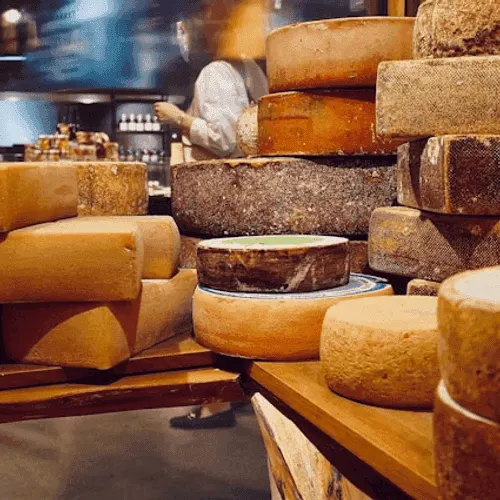
Other names cheddar cheese, Cheddar cheese from cow's milk
Cheddar: high in histamine and tyramine. If you're sensitive to any of these, check it against your profile before eating.
Intolerances
- Histamine (+liberators / DAO inhibitors)High
Cheddar is at the top of this axis for one reason: it is aged, and histamine climbs with ageing about as reliably in cheddar as in any cheese - mild at three months, extra-mature past two years, and the wrapper tells you which. There is no cheddar-wide figure worth quoting; there is a figure for the block in front of you, and its age is the best guide to it. Melting it changes nothing: histamine survives every temperature a kitchen reaches. Across a shelf of retail cheeses the spread is enormous and the variety is a weak predictor. Pasteurisation, starter culture, salt and ripening time are the real variables.
Sources· 3
- Mayer H et al., J Chromatogr A 2010
- Linares D et al., Front Microbiol 2012
- Maintz & Novak, Am J Clin Nutr 2007
- TyramineHigh
Cheddar is the cheese the 'cheese effect' was named after - the first MAOI hypertensive reactions in the 1960s were traced to it. Bacteria break the milk protein down over months and decarboxylate its tyrosine. The measured spread is enormous and that is the practical point: mild and processed cheddar average under 150 mg/kg, extra-sharp around 270, and the highest single sample on record reached 700 - you cannot tell which piece you have. For someone on a non-selective MAOI the dose commonly cited as dangerous is about 6 mg, which an extra-sharp cheddar delivers in roughly 25 g.
Sources· 3
- Sadighara P et al., Food Production, Processing and Nutrition 6:30 (2024), systematic review of tyramine in cheese
- Gardner et al., J Clin Psychiatry 1996
- Shulman KI et al., J Clin Psychopharmacol 9 (1989)
- SalicylateNone
- SucroseNone
- FODMAPsNone
- LactoseFODMAPsNone
Mature cheddar is measured with no detectable lactose or galactose - but the word 'mature' is doing work in that sentence: the samples analysed were farmhouse cheddar, and a mild supermarket cheddar of a few weeks has not had the same time. The age on the packet is the number that matters, here as on the tyramine axis.
Sources· 2
- Portnoi PA & MacDonald A, J Hum Nutr Diet 22 (2009), 400-408, 109 samples of 12 cheese types analysed for the UK Galactosaemia Support Group
- USDA FoodData Central
- OligosaccharidesFODMAPsNone
- SorbitolFODMAPsNone
- FructoseFODMAPsNone
- NickelNone
- OxalatesNone
- GlutenNo
Intolerance levels are based on our documented scientific sources. See sources →
React to Histamine (+liberators / DAO inhibitors)? Check these too








More in Dairy
 Blue cheese
 Brie
Brie Buffalo mozzarella
 Buttermilk
 Camembert
 Casein
 Cream
Cream- Cream cheese
 Crème fraîche
 Edam
Edam- Emmental
 Evaporated milk
Frequently asked questions
Which intolerances does cheddar affect?
Cheddar is notable for histamine and tyramine. Clear on salicylate, sucrose, FODMAPs, lactose, oligosaccharides, sorbitol, fructose, nickel, oxalates and gluten.
Does cheddar contain histamine?
Yes — cheddar is high in histamine. Cheddar is at the top of this axis for one reason: it is aged, and histamine climbs with ageing about as reliably in cheddar as in any cheese - mild at three months, extra-mature past two years, and the wrapper tells you which. There is no cheddar-wide figure worth quoting; there is a figure for the block in front of you, and its age is the best guide to it. Melting it changes nothing: histamine survives every temperature a kitchen reaches. Across a shelf of retail cheeses the spread is enormous and the variety is a weak predictor. Pasteurisation, starter culture, salt and ripening time are the real variables.
Does cheddar contain tyramine?
Yes — cheddar is high in tyramine. Cheddar is the cheese the 'cheese effect' was named after - the first MAOI hypertensive reactions in the 1960s were traced to it. Bacteria break the milk protein down over months and decarboxylate its tyrosine. The measured spread is enormous and that is the practical point: mild and processed cheddar average under 150 mg/kg, extra-sharp around 270, and the highest single sample on record reached 700 - you cannot tell which piece you have. For someone on a non-selective MAOI the dose commonly cited as dangerous is about 6 mg, which an extra-sharp cheddar delivers in roughly 25 g. Amounts vary by brand and recipe, so always check the label of the exact product.
Check any product in seconds
Scan a barcode with the Yllo app and see straight away whether a product fits your intolerances.