Grated mozzarella
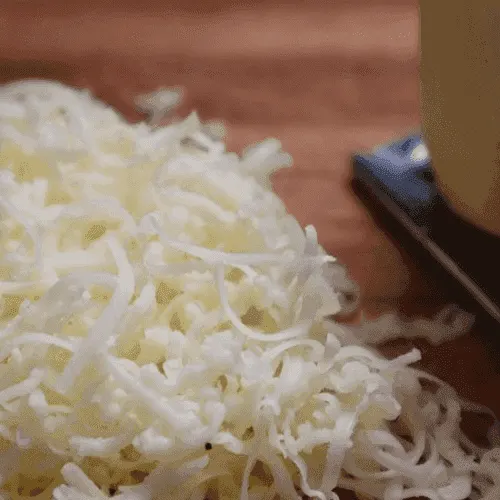
Other names shredded mozzarella
Grated mozzarella: low in histamine, tyramine, FODMAPs, lactose and gluten. If you're sensitive to any of these, check it against your profile before eating.
Intolerances
- Histamine (+liberators / DAO inhibitors)Low
Grated mozzarella is a young cheese - low in histamine as made - turned into a high-surface, long-shelf-life product: grating multiplies the exposed area, and the anti-caking starch keeps it apart for weeks. Nobody has measured the bag against a block grated at home, so take that as reasoning rather than a figure: more surface and more time is the mechanism that governs amines everywhere else, and it is the only reason this sits above plain mozzarella.
Sources· 2
- Maintz & Novak, Am J Clin Nutr 2007
- Zuberbier et al., EAACI/GA2LEN urticaria guideline
- TyramineLow
Grated mozzarella is a young, low-tyramine cheese turned into a high-surface product with a long shelf life - grating multiplies the exposed area and the pack then sits for weeks. Nobody has measured the bag against a block grated at home, so take that as reasoning rather than a figure: more surface and more time is the mechanism that governs amines everywhere else, and it is the only reason this sits above plain mozzarella.
Sources· 2
- EFSA Panel on Biological Hazards, EFSA Journal 2011
- McCabe-Sellers et al., J Food Compos Anal 2006
- FODMAPsLow
Grated mozzarella is a fresh cheese, and fresh cheeses are low for a different reason from aged ones: the lactose left with the whey when the curd was drained, rather than being eaten over time. Removal beats fermentation here, and it happens in an afternoon rather than a season.
- LactoseFODMAPsLow
Grated mozzarella is the same young cheese with more surface and a longer shelf life. The anti-caking coating is usually potato or maize starch rather than anything dairy, which is worth knowing if you are reading the label for milk.
Sources· 2
- USDA FoodData Central
- McCance & Widdowson's Composition of Foods (PHE, 2015)
- GlutenPossible
Grated mozzarella is the only cheese here with a real route: the anti-caking powder that keeps the strands apart. It is usually potato or maize starch, occasionally wheat, and the label is the only way to tell. A block grated at home has no such question.
Sources· 5
- Coeliac UK — gluten free diet guidance: “All spirits are distilled during the manufacturing process and this process removes any trace of gluten”
- beer, lagers, stouts and ales not suitable
- gluten free beer at or below 20 ppm
- barley malt vinegar to be both tested and labelled gluten free
- Regulation (EU) No 1169/2011, Annex II
- SalicylateNone
- SucroseNone
- OligosaccharidesFODMAPsNone
- SorbitolFODMAPsNone
- FructoseFODMAPsNone
- NickelNone
- OxalatesNone
Intolerance levels are based on our documented scientific sources. See sources →
React to Histamine (+liberators / DAO inhibitors)? Check these too

More in Dairy
 Blue cheese
 Brie
Brie Buffalo mozzarella
 Buttermilk
 Camembert
 Casein
 Cheddar
 Cream
Cream- Cream cheese
 Crème fraîche
 Edam
Edam- Emmental
Frequently asked questions
Which intolerances does grated mozzarella affect?
Grated mozzarella is notable for histamine, tyramine, FODMAPs, lactose and gluten. Clear on salicylate, sucrose, oligosaccharides, sorbitol, fructose, nickel and oxalates.
Does grated mozzarella contain histamine?
Grated mozzarella contains only low levels of histamine. Grated mozzarella is a young cheese - low in histamine as made - turned into a high-surface, long-shelf-life product: grating multiplies the exposed area, and the anti-caking starch keeps it apart for weeks. Nobody has measured the bag against a block grated at home, so take that as reasoning rather than a figure: more surface and more time is the mechanism that governs amines everywhere else, and it is the only reason this sits above plain mozzarella.
Does grated mozzarella contain tyramine?
Grated mozzarella contains only low levels of tyramine. Grated mozzarella is a young, low-tyramine cheese turned into a high-surface product with a long shelf life - grating multiplies the exposed area and the pack then sits for weeks. Nobody has measured the bag against a block grated at home, so take that as reasoning rather than a figure: more surface and more time is the mechanism that governs amines everywhere else, and it is the only reason this sits above plain mozzarella.
Does grated mozzarella contain FODMAPs?
Grated mozzarella contains only low levels of FODMAPs. Grated mozzarella is a fresh cheese, and fresh cheeses are low for a different reason from aged ones: the lactose left with the whey when the curd was drained, rather than being eaten over time. Removal beats fermentation here, and it happens in an afternoon rather than a season.
Does grated mozzarella contain lactose?
Grated mozzarella contains only low levels of lactose. Grated mozzarella is the same young cheese with more surface and a longer shelf life. The anti-caking coating is usually potato or maize starch rather than anything dairy, which is worth knowing if you are reading the label for milk. Amounts vary by brand and recipe, so always check the label of the exact product.
Check any product in seconds
Scan a barcode with the Yllo app and see straight away whether a product fits your intolerances.