Natto
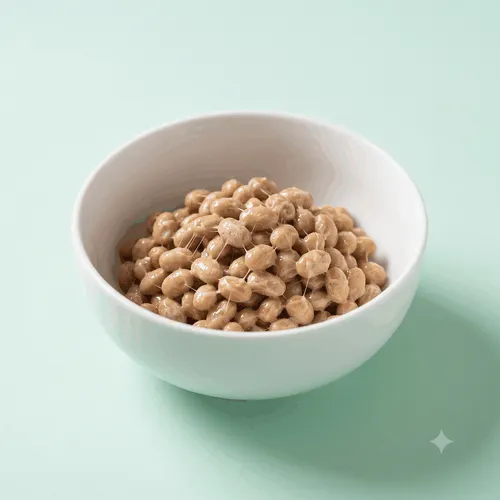
Other names nattō, fermented soybeans
Natto: high in histamine, tyramine and nickel; moderate in FODMAPs and oligosaccharides; low in gluten, salicylate and oxalates. If you're sensitive to any of these, check it against your profile before eating.
Intolerances
- Histamine (+liberators / DAO inhibitors)High
Natto is among the highest-amine foods in the surveys - the bacterial fermentation that gives it its texture is exactly the process that produces histamine and tyramine. There is no mild version.
- TyramineHigh
Natto is whole soybeans fermented by Bacillus, and surveys of soy products put the fermented ones far above the unfermented. The bean itself is low; what the bacteria do to it over days is the entire difference. Fermented soy is where this axis is decided, and it was measured as such: the level follows a survey of biologically active amines in FERMENTED SOY PRODUCTS. The fermentation is the variable - the same bean unfermented is a different food here.
Sources· 1
- Toro-Funes N. et al., Food Chemistry 173 (2015) 1119-1124, biologically active amines in fermented soy products
- NickelHigh
Natto is whole fermented soybeans, eaten by the beanful. Its nickel is the bean's, untouched by the fermentation - which is worth saying, because natto is often chosen precisely for what fermentation does to everything else in it.
Sources· 2
- Flyvholm M-A et al., Z Lebensm Unters Forsch 179 (1984) 427-431, nickel content of food and estimates of dietary intake
- Noel L et al., Food Chemistry 132 (2012) 1502-1513, second French Total Diet Study, nickel among nine trace elements
- FODMAPsModerate
Natto is whole soybeans fermented by Bacillus subtilis, and it is the raffinose-family oligosaccharides of the bean that put it on this axis. Whether fermentation removes them depends on the organism rather than on fermentation itself: among the moulds that make tempeh, Rehms found R. oryzae and R. stolonifer consume stachyose, raffinose and melibiose completely, while R. oligosporus NRRL 2710 - the ordinary tempeh starter - hydrolyses none of them.
Sources· 2
- Rehms H & Barz W, Appl Microbiol Biotechnol 44 (1995) 47-52, degradation of stachyose, raffinose, melibiose and sucrose by different tempe-producing Rhizopus fungi
- it measures the fungi in culture rather than a finished food, and not the Bacillus that makes natto
- OligosaccharidesFODMAPsModerate
Natto is whole soya beans fermented by Bacillus subtilis, and fermentation consumes part of the GOS - but the beans are eaten whole rather than pressed, so more remains than in tofu or miso. Whole plus fermented lands between the two.
Sources· 1
- Švejstil R. et al., Sci Agric Bohem 46:2 (2015) 73-77, raffinose-series oligosaccharides in soybean products
- GlutenPossible
Natto is fermented soybeans and nothing else - the beans are gluten-free. The sachet of tare sauce sold in the same pack is usually wheat-based soy sauce, and that is what changes the answer. What a label may promise is set by regulation and not by a recipe: 828/2014 allows "gluten-free" at or below 20 mg/kg, sets the conditions oats must meet, and admits wheat-derived ingredients in a gluten-free food provided the finished product stays under that ceiling. It measures nothing — it says what a food must meet to carry the claim, which is exactly what a food name cannot tell you.
Sources· 1
- Commission Implementing Regulation (EU) No 828/2014, the conditions for a gluten-free claim
- SalicylateLow
Fermented soybeans with nothing added, so the salicylate stays as low as the bean. The sauce sachet supplied with it may not be.
- OxalatesLow
Natto comes from the soybean, which carries oxalate like any pulse - but the processing matters more than the bean. Natto is the whole bean fermented as it is, with nothing pressed or strained out, so it keeps what the bean had. Oxalate is water-soluble, so what is boiled and drained differs from what is steamed or eaten whole.
Sources· 1
- Gad S. et al., Food Chemistry 8:3 (1982) 169-177, oxalate of pulses and the effect of cooking
- LactoseFODMAPsNone
- FructoseFODMAPsNone
- SorbitolFODMAPsNone
- SucroseNone
Intolerance levels are based on our documented scientific sources. See sources →
React to Histamine (+liberators / DAO inhibitors)? Check these too









More in Other
 Almond butter
 Almond cream
 Almond yogurt
 Apple puree
 Beef broth
 Beef gelatin
 Beetroot juice powder
 Bouillon cube
 Breadcrumbs
 Calcium
 Cashew cheese
 Chicken broth
Frequently asked questions
Which intolerances does natto affect?
Natto is notable for histamine, tyramine, nickel, FODMAPs, oligosaccharides, gluten, salicylate and oxalates. Clear on lactose, fructose, sorbitol and sucrose.
Does natto contain histamine?
Yes — natto is high in histamine. Natto is among the highest-amine foods in the surveys - the bacterial fermentation that gives it its texture is exactly the process that produces histamine and tyramine. There is no mild version.
Does natto contain tyramine?
Yes — natto is high in tyramine. Natto is whole soybeans fermented by Bacillus, and surveys of soy products put the fermented ones far above the unfermented. The bean itself is low; what the bacteria do to it over days is the entire difference. Fermented soy is where this axis is decided, and it was measured as such: the level follows a survey of biologically active amines in FERMENTED SOY PRODUCTS. The fermentation is the variable - the same bean unfermented is a different food here.
Does natto contain nickel?
Yes — natto is high in nickel. Natto is whole fermented soybeans, eaten by the beanful. Its nickel is the bean's, untouched by the fermentation - which is worth saying, because natto is often chosen precisely for what fermentation does to everything else in it.
Does natto contain FODMAPs?
Natto contains moderate levels of FODMAPs. Natto is whole soybeans fermented by Bacillus subtilis, and it is the raffinose-family oligosaccharides of the bean that put it on this axis. Whether fermentation removes them depends on the organism rather than on fermentation itself: among the moulds that make tempeh, Rehms found R. oryzae and R. stolonifer consume stachyose, raffinose and melibiose completely, while R. oligosporus NRRL 2710 - the ordinary tempeh starter - hydrolyses none of them. Amounts vary by brand and recipe, so always check the label of the exact product.
Check any product in seconds
Scan a barcode with the Yllo app and see straight away whether a product fits your intolerances.