Miso
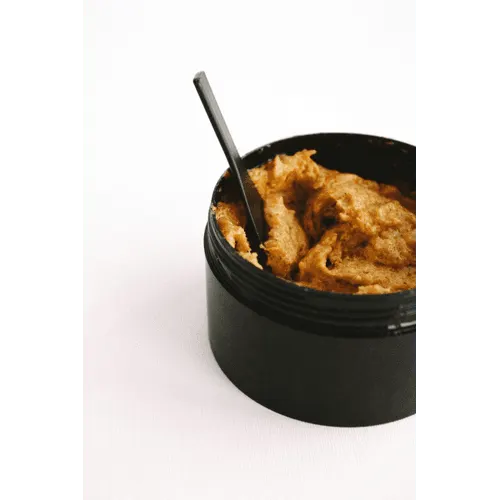
Other names Miso, Fermented soybean paste
Miso: high in histamine and tyramine; moderate in FODMAPs, oligosaccharides and nickel; low in gluten, salicylate and oxalates. If you're sensitive to any of these, check it against your profile before eating.
Intolerances
- Histamine (+liberators / DAO inhibitors)High
Miso is soy fermented with koji for anywhere between three months and three years, and the colour tells you which: white miso is the young one, red miso the long-fermented. That is a real lever - shiro miso and hatcho miso are not the same food for histamine, and the paler pot is the shorter ferment.
Sources· 2
- Comas-Baste et al., Biomolecules 2020
- McCabe-Sellers et al., J Food Compos Anal 2006
- TyramineHigh
Miso ferments for anywhere between three months and three years, and the colour tells you which: white miso is the young one, red the long-fermented. That is a real lever on the tyramine - shiro and hatcho miso are not the same food, and the paler pot is the shorter ferment.
Sources· 2
- EFSA Journal 2011 (tyramine and histamine in fermented foods)
- McCabe-Sellers et al., J Food Compos Anal 2006
- FODMAPsModerate
Miso is a paste of soybeans fermented with koji mould, so the galacto-oligosaccharides and fructans of the soya bean are what put it on this axis, and how much of them survives depends on the ferment.
- OligosaccharidesFODMAPsModerate
Miso is fermented soy, and the koji mould consumes much of the raffinose family during the months it works - which is why miso sits well below the bean it is made from. What remains is a residue, in a food used by the spoonful.
Sources· 1
- Švejstil R. et al., Sci Agric Bohem 46:2 (2015) 73-77, raffinose-series oligosaccharides in soybean products
- NickelModerate
Miso is a concentrated soybean paste, so gram for gram it carries the bean's nickel - but it is used a spoonful at a time in a bowl of broth. The level reflects that portion, not the paste in the tub.
Sources· 1
- Noel L et al., Food Chemistry 132 (2012) 1502-1513, second French Total Diet Study, nickel among nine trace elements
- GlutenPossible
Miso is where the gluten is an INGREDIENT rather than a contaminant: mugi miso is fermented on barley, and it is one of the three common types. Rice miso and soy-only miso carry none. The colour is no guide - only the grain named on the label is.
Sources· 2
- Regulation (EU) No 1169/2011, Annex II (cereals containing gluten must be declared)
- Commission Implementing Regulation (EU) No 828/2014 (gluten-free at or below 20 mg/kg)
- SalicylateLow
Fermented soy, low on this axis — miso is notable for amines rather than salicylate. Barley and rice misos are equivalent here.
- OxalatesLow
Miso comes from the soybean, which carries oxalate like any pulse - but the processing matters more than the bean. Miso is a salted paste eaten by the spoonful in a broth, and that portion is what keeps it low whatever the paste holds. Oxalate is water-soluble, so what is boiled and drained differs from what is steamed or eaten whole.
Sources· 1
- Gad S. et al., Food Chemistry 8:3 (1982) 169-177, oxalate of pulses and the effect of cooking
- LactoseFODMAPsNone
- FructoseFODMAPsNone
- SorbitolFODMAPsNone
- SucroseNone
Intolerance levels are based on our documented scientific sources. See sources →
React to Histamine (+liberators / DAO inhibitors)? Check these too









More in Other
 Almond butter
 Almond cream
 Almond yogurt
 Apple puree
 Beef broth
 Beef gelatin
 Beetroot juice powder
 Bouillon cube
 Breadcrumbs
 Calcium
 Cashew cheese
 Chicken broth
Frequently asked questions
Which intolerances does Miso affect?
Miso is notable for histamine, tyramine, FODMAPs, oligosaccharides, nickel, gluten, salicylate and oxalates. Clear on lactose, fructose, sorbitol and sucrose.
Does Miso contain histamine?
Yes — Miso is high in histamine. Miso is soy fermented with koji for anywhere between three months and three years, and the colour tells you which: white miso is the young one, red miso the long-fermented. That is a real lever - shiro miso and hatcho miso are not the same food for histamine, and the paler pot is the shorter ferment.
Does Miso contain tyramine?
Yes — Miso is high in tyramine. Miso ferments for anywhere between three months and three years, and the colour tells you which: white miso is the young one, red the long-fermented. That is a real lever on the tyramine - shiro and hatcho miso are not the same food, and the paler pot is the shorter ferment.
Does Miso contain FODMAPs?
Miso contains moderate levels of FODMAPs. Miso is a paste of soybeans fermented with koji mould, so the galacto-oligosaccharides and fructans of the soya bean are what put it on this axis, and how much of them survives depends on the ferment.
Does Miso contain oligosaccharides?
Miso contains moderate levels of oligosaccharides. Miso is fermented soy, and the koji mould consumes much of the raffinose family during the months it works - which is why miso sits well below the bean it is made from. What remains is a residue, in a food used by the spoonful. Amounts vary by brand and recipe, so always check the label of the exact product.
Check any product in seconds
Scan a barcode with the Yllo app and see straight away whether a product fits your intolerances.