Green tea
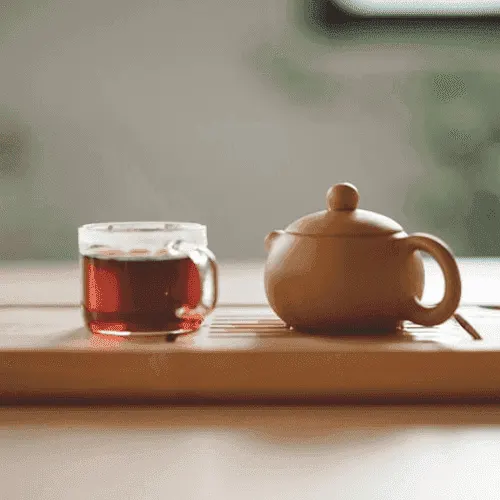
Green tea: low in histamine, tyramine, nickel and oxalates. If you're sensitive to any of these, check it against your profile before eating.
Intolerances
- Histamine (+liberators / DAO inhibitors)Low
Green tea is naturally low in histamine, and that is the whole of its case here. Two claims often made for it do not hold. Coffee is not an established inhibitor of DAO - the claim is repeated in every food list on this subject and supported by very little - so “better than coffee because coffee blocks DAO” rested on nothing. And green tea is not caffeine-free: whatever the caffeine argument is worth, it applies here too, at a lower dose. The catechins, EGCG above all, do damp mast-cell activation in laboratory work, which is interesting and is not the same as an effect in someone drinking tea. That is now measured rather than assumed: Brückner infused five green teas among 21 and found no histamine in any tea of any kind, with the authors expecting no health risk even from large quantities. Green tea is not gentler than black on this evidence — neither carries histamine at all.
Sources· 3
- Maintz & Novak, Am J Clin Nutr 2007
- Comas-Baste et al., Biomolecules 10:1181 (2020)
- Brückner H et al., Amino Acids 2012, biogenic amines in tea infusions
- TyramineLow
Green tea carries measurable amines in the leaf, but an infusion transfers only part of what a plant holds into the water and the leaf is discarded. Note the contrast with the histamine axis, where tea is listed for inhibiting the DAO enzyme - tyramine is cleared by MAO instead, which tea does not touch.
- NickelLow
Green tea is the same plant unoxidised, brewed cooler and shorter than black tea - which extracts slightly less. Matcha is the exception in this family: there the leaf is drunk whole. What matters for a leaf you steep rather than eat was measured directly: the study behind this level analysed the herb AND its water infusion, and most of the nickel stays in the leaf. The cup is not the plant.
Sources· 1
- Ababneh F. et al., Int J Anal Chem 6971916 (2017) 1-8, trace elements in herbs and in their water infusions
- OxalatesLow
Green tea and black tea are the same leaf: Camellia sinensis, separated by oxidation, which does not remove oxalate. No published assay tells the two apart. As with black tea the variable is volume — Noonan finds tea the largest single contributor to the 70 to 150 mg an English diet takes in each day.
Sources· 1
- Noonan S.C. & Savage G.P., Asia Pac J Clin Nutr 8 (1999) 64–74: mean oxalate intake 70–150 mg a day in English diets, tea the largest single contributor, and soaking or cooking reduces oxalate by leaching
- SalicylateNone
- SucroseNone
- FODMAPsNone
- LactoseFODMAPsNone
- OligosaccharidesFODMAPsNone
- SorbitolFODMAPsNone
- FructoseFODMAPsNone
- GlutenNo
Intolerance levels are based on our documented scientific sources. See sources →
React to Histamine (+liberators / DAO inhibitors)? Check these too
More in Drinks
 Advocaat
 Alcohol
 Alcohol free beer
 Almond Milk
 Apple juice concentrate
- Beer
- Black tea
- Cashew milk
 Champagne
- Coconut Milk
 Coconut water
 Coffee
Frequently asked questions
Which intolerances does green tea affect?
Green tea is notable for histamine, tyramine, nickel and oxalates. Clear on salicylate, sucrose, FODMAPs, lactose, oligosaccharides, sorbitol, fructose and gluten.
Does green tea contain histamine?
Green tea contains only low levels of histamine. Green tea is naturally low in histamine, and that is the whole of its case here. Two claims often made for it do not hold. Coffee is not an established inhibitor of DAO - the claim is repeated in every food list on this subject and supported by very little - so “better than coffee because coffee blocks DAO” rested on nothing. And green tea is not caffeine-free: whatever the caffeine argument is worth, it applies here too, at a lower dose. The catechins, EGCG above all, do damp mast-cell activation in laboratory work, which is interesting and is not the same as an effect in someone drinking tea. That is now measured rather than assumed: Brückner infused five green teas among 21 and found no histamine in any tea of any kind, with the authors expecting no health risk even from large quantities. Green tea is not gentler than black on this evidence — neither carries histamine at all.
Does green tea contain tyramine?
Green tea contains only low levels of tyramine. Green tea carries measurable amines in the leaf, but an infusion transfers only part of what a plant holds into the water and the leaf is discarded. Note the contrast with the histamine axis, where tea is listed for inhibiting the DAO enzyme - tyramine is cleared by MAO instead, which tea does not touch.
Does green tea contain nickel?
Green tea contains only low levels of nickel. Green tea is the same plant unoxidised, brewed cooler and shorter than black tea - which extracts slightly less. Matcha is the exception in this family: there the leaf is drunk whole. What matters for a leaf you steep rather than eat was measured directly: the study behind this level analysed the herb AND its water infusion, and most of the nickel stays in the leaf. The cup is not the plant.
Does green tea contain oxalates?
Green tea contains only low levels of oxalates. Green tea and black tea are the same leaf: Camellia sinensis, separated by oxidation, which does not remove oxalate. No published assay tells the two apart. As with black tea the variable is volume — Noonan finds tea the largest single contributor to the 70 to 150 mg an English diet takes in each day. Amounts vary by brand and recipe, so always check the label of the exact product.
Check any product in seconds
Scan a barcode with the Yllo app and see straight away whether a product fits your intolerances.